

Category: Analysis & Strategy
The analysis published under this category are as follows.

Monday, May 12, 2008
New Diamond Rated Articles / sitenews / Analysis & Strategy
By: Sarah_Jones
The Market Oracle announces our new Diamond rating for the real one in fifty article gems.
Read full article... Read full article...

Tuesday, March 06, 2007
More Central Banks diversify away from the US Dollar- Forex Crises to follow / Currencies / Analysis & Strategy
By: Julian_DW_Phillips
For years now we have warned of tsunami like capital waves crossing the globe bringing financial drama with it. We have pointed to the structural problems that could give rise to the damage these waves will cause. We have warned of the Central Bank's moves away from the U.S.$. We have also warned of the damage the Trade deficit is doing to the U.S. We have also warned of global foreign exchange and rates crises.
We coined the expression "Live now, Pay later" syndrome that has been all-pervasive in the U.S.A. Add this to the "so far, so good" attitude and what happened this week in global markets has been long overdue. It signals that globalization and the free flow of capital across this globe of managed foreign exchange rates, plus the interdependency of global economies will undermine all paper currencies to some extent. This week saw that begin . Probably a group of global funds thought the time was ripe in many markets to rattle some cages and down the markets went. That they should have this ability and power is the frightening thing and the situation can only worsen as other speculators and fund powerhouses get the scent of this action.
Read full article... Read full article...

Tuesday, March 06, 2007
Uranium Investing - In Situ Recovery Mining: A New Method for Uranium Mining Explained / Commodities / Analysis & Strategy
By: James_Finch
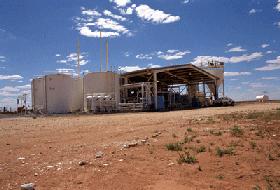
In Situ Recovery (ISR) uranium mining is responsible for nearly all U.S. uranium mining (except for recovery through phosphates). More than 20 percent of global uranium mining now comes from the in situ recovery method, predominantly through In Situ Leach (ISL) mining in Kazakhstan and in Australia. Because of the large number of ISR uranium projects on the horizon within the next ten years, both in the United States, Kazakhstan and Australia, the in situ (ISR) uranium mining method will provide U.S and global utilities with tens of millions of pounds of newly mined uranium by 2020.

Monday, March 05, 2007
Stock Market Manipulation - The secret maneuverings of the Plunge Protection Team (PPT) / Stock-Markets / Analysis & Strategy
By: Mike_Whitney
The Working Group on Financial Markets, also know as the Plunge Protection Team, was created by Ronald Reagan to prevent a repeat of the Wall Street meltdown of October 1987. Its members include the Secretary of the Treasury, the Chairman of the Federal Reserve, the Chairman of the SEC and the Chairman of the Commodity Futures Trading Commission. Recently, the team has been on high-alert given the increased volatility of the markets and, what Hank Paulson calls, "the systemic risk posed by hedge funds and derivatives.”Last Tuesday's 416 point drop in the stock market has sent tremors through global system. An 8% freefall on the Chinese stock exchange triggered a massive equities sell-off which continued sporadically throughout the week. The sudden shift in sentiment, from Bull to Bear, has drawn more attention to deeply rooted “systemic” problems in the US economy. US manufacturing is already in recession, the dollar continues to weaken, consumer spending is flat, and the sub-prime market in real estate has begun to nosedive. These have all contributed to the markets' erratic behavior and created the likelihood that the Plunge Protection Team may be stealthily intervening behind the scenes.
Read full article... Read full article...
Monday, March 05, 2007
Un-winding of Yen Carry Trade Likely Cause of China's Stock Market Crash / Stock-Markets / Analysis & Strategy
By: Adrian_Ash
A BOWL OF RICE topped with chicken and egg, oyakodon translates literally as "mother and child" – a tasteless joke for the chicken and its babies, perhaps. But add a dash of soy sauce and it makes for a very tasty meal.The chicken-and-egg question of Japanese carry-trades, on the other hand, is rapidly making investors sick the world over. Which came first – the end of carry, or the collapse of share prices in Shanghai? The newswires blame Beijing's threat of higher interest rates...new restrictions on stock market IPOS...even a tax on financial speculation!
But what if the sudden unwinding of the carry-trade caused Shanghai to collapse instead? If you think that oyakodon has got little to do with the S&P losing 5% since this time last week, take note. For the chicken and egg question also applies going forward.
Read full article... Read full article...

Monday, March 05, 2007
The Trading Doctor - What do You See When you Look in the Mirror ? / InvestorEducation / Analysis & Strategy
By: Dr_Janice_Dorn
The way we perceive our actions or the consequences of our actions is, often, entwined closely with the way we identify who we are. We traders often define ourselves in terms of our trading...our actions and inactions, our triumphs, our gains and our losses. As a result, it is easy to merge so strongly with a decision that has resulted in unexpected negative consequences that we actually become that decision.
The disappointment and shame we feel when we make what we perceive is an error, grows until it becomes a dominant part of our identity. We rationalize our "poor" decisions by labeling ourselves incompetent decision makers, or, in the trading vernacular "idiots." Imagine walking around all day telling everyone that you are an idiot? Why are you doing that? What gain are you getting from that, and what message are you giving to those around you?
Read full article... Read full article...
Sunday, March 04, 2007
The Trading Doctor - TIME TRAPS - Learn to Manage your Time / InvestorEducation / Analysis & Strategy
By: Dr_Janice_Dorn
Time is the substance I am made of. Time is a river which sweeps me along, but I am the river; it is a tiger which destroys me, but I am the tiger; it is a fire which consumes me, but I am the fire. The world, unfortunately, is real; I, unfortunately, am Borges... Jose Luis Borges, Essay: "A New Refutation of Time," 1946
We react and respond to the following: data, information, knowledge and wisdom. My vision is to bring you knowledge and wisdom which will enrich your life, challenge you and propel you to higher and higher levels of evolution of your brain. I want each and every one of you who who reads what I write to be--not on the cutting edge of the curve-- but far ahead of the curve. My wish for you and for myself is that we retain and remain imbued with a personal value system that enriches and nourishes every aspect of our lives.
Read full article... Read full article...

Sunday, March 04, 2007
US & UK Housing Market - How (Not) To Fix the Subprime Mortgages Collapse / Housing-Market / Analysis & Strategy
By: Adrian_Ash
As always, the market's way ahead of the Fed...BEN BERNANKE told politicians in Washington this week that the collapse of subprime mortgage companies had been "contained".
Perhaps Dr. Ben was just thinking of Fremont delaying its fourth-quarter results...or New Century Financial (NEW) having to restate its earnings for the first nine months of last year.
Yes, that little nugget of news knocked NEW's stock 30% lower in one session last month. But the damage was still "contained", right? It's not like Bernanke had to revise GDP thirty per cent lower as a result.
Read full article... Read full article...
Saturday, March 03, 2007
Weekly Financial Markets Review - China Plunge, Dow Jones Index Errors and US Recession / Stock-Markets / Analysis & Strategy
By: Nadeem_Walayat
The week was dominated by Tuesdays sell off in China's Shanghai Index by 9%, and its ripple effect across the Worlds Stock Markets, which saw falls of more than 4% across the board by the end of the week.
We had been warning of the likely hood of a sell off in China for much of February. Several articles preceded the sell off in the stock markets including Mondays US Subprime Mortgages Fallout and Declining Housing Market likely to hit the Stock Market.
Read full article... Read full article...
Saturday, March 03, 2007
The Real Reason for the the Stock Market Falls - Cheap Money from the Bank of Japan / Stock-Markets / Analysis & Strategy
By: Money_and_Markets
If you think stock markets were the only ones that went haywire this week, look again:
The dollar fell sharply, especially against the yen ... Treasury bonds soared, with the long bond gaining almost a point and a half on February 27 alone ... and gold prices swung all over the place.
In other words, volatility went off the charts in almost every market I track. A volatility gauge maintained by the Chicago Board Options Exchange, for example, exploded 63% in a single day, the biggest increase in U.S. market history.
What single force links all this action? What little (or big!) beast could possibly be behind so many seemingly disparate market moves? Here's my answer …
Read full article... Read full article...
Saturday, March 03, 2007
Spike in VIX Stock Market volatility - The End Of Complacency? / Stock-Markets / Analysis & Strategy
By: John_Mauldin
This week we look at the recent upspike in volatility, see if we can connect some dots with the recent slew of earnings downgrades and the problems in the subprime mortgage world, and follow the money as risk is being taken off the table. I don't "buy" the China problem, but there may be an Asian connection. Let's try and keep it simple as we try and see what's behind curtain #3 labeled "Which direction is the stock market headed?"
But first, if you have not signed up for my Strategic Investment Conference in La Jolla, California, April 19-21, this week's market action is a perfect reason why you should. Want to get the real lowdown on China? Come listen to one of the premier Asian investment experts, Louis-Vincent Gave, give us his on-the-ground view of Asia.
Read full article... Read full article...

Friday, March 02, 2007
Yield Curve Inversion and Inflation - Consumer Price Index (CPI) / Economics / Analysis & Strategy
By: Adam_Oliensis
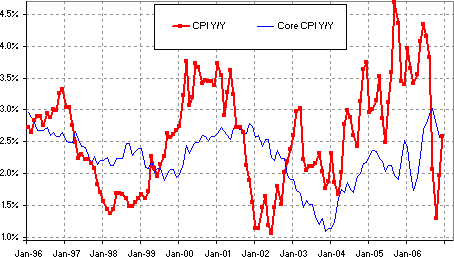
While many argue that the Consumer Price Index is a flawed indicator (some claim it understates inflation and others claim it overstates inflation), it does generate heated debate and can act as a catalyst for stock-market activity. In the context of Fed Chairman Bernanke's relatively dovish comments before both houses of Congress last week, a surprise on the CPI data could easily spur market volatility this coming week.
Currently the consensus estimate is for a +0.1% M/M on the CPI, which is below trend, and would be bullish for stocks. The most recent Y/Y reading stands at +2.61%...
Friday, March 02, 2007
Larry's take on the wild Stock Market and Gold action / Stock-Markets / Analysis & Strategy
By: Money_and_Markets
For months, I've been warning you that U.S. stock markets looked overbought and were headed for a tumble.
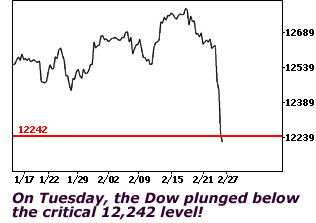
And just last week, I said that a Dow close below the 12,242 level “will be your signal that the recent economic strength is rolling over, that investors think corporate earnings have peaked, and that the weakness in the housing sector is really hitting home.”
Friday, March 02, 2007
Inflation in the pipleline not Deflation - Stock Market is Correcting. / Stock-Markets / Analysis & Strategy
By: David_Petch
According to deflationists, we are at the cusp of a collapse in the money supply. There are two articles I previously published titled "Diatribes of a Deflationist" and "Diatribes of a Deflationist II". I do not like to spew information contained in prior research articles because unless I see any change to an argument it is pointless to regurgitate the same information. As such refer to the archives section of this site under my name to review these and other prior material mentioned below.Read full article... Read full article...
Thursday, March 01, 2007
Stock Market Shocks, Money Supply Liquidity and the US Dollar / Economics / Analysis & Strategy
By: Jim_Willie_CB
Events in the last week have certainly caused a stir. Just what precipitated the broad global selloff. Was it the unwind of the Yen Carry Trade, a week delayed? Was it only attributable to the Chinese and their more stern stance against adolescent credit abuses in the Middle Kingdom?
Was it Al Greenspan's comments on an economic recession looming near on the horizon? Was it caution on risk pricing in view of the insane Iran vs USA posturing in the Persian Gulf? Was it Goldman Sachs orchestration with collusion from Beijing, after massive short positions were put in place? Were the GSax powers motivated by the alarms going off in the gold and silver markets, as gold neared $700 and silver passed $14? Methinks all the above, never just one factor in an increasingly complex financial world. The global markets have become a tangled web.
Read full article... Read full article...
Thursday, March 01, 2007
Stock Market Meltdown shows Greenspan's 'invisible hand' / Stock-Markets / Analysis & Strategy
By: Mike_Whitney
 Tuesdays stock market freefall has Greenspan's bloody fingerprints all over it. And, no, I'm not talking about Sir Alan's crystal ball predictions about the impending recession; that's just more of his same circuitous blather. The real issue is the Fed's suicidal policies of low interest rates and currency deregulation which have paved the way for economic Armageddon. Whether the Chinese stock market contagion persists or not is immaterial; the American economy is headed for the dumpster and it's all because of the wizened former fed-chief, Alan “Great Depression” Greenspan.
 So, what does the stumbling Chinese stock market have to do with Greenspan?
Read full article... Read full article...
Thursday, March 01, 2007
First Inflation then Deflation? - Financial Markets Crash / Economics / Analysis & Strategy
By: Christopher_Laird
With gold up at $680, it looks like $700 is around the corner. So then, if a big gold surge is around the corner, one may ask, what is a longer term prognosis for not only gold but financial markets? Answer: first inflation and then deflation.
Right now, the world is inflating like mad. Money growth in most of the major world economies is near or exceeding 10% a year, and China is the biggie at 18% plus. That, combined with historically low interest rates is causing huge finance and asset bubbles. Central banks are way behind the inflation/interest rate curve right now, and are basically stuck in that rut because if any of them combat inflation by raising interest rates, they find their currencies strengthen, and lose market share.
Read full article... Read full article...
Thursday, March 01, 2007
US Economy and Dollar Balancing Act / Economics / Analysis & Strategy
By: Michael_Pento
Economists are now arguing over whether it will be a hard or soft landing for the U.S. economy. The fact that a landing will occur is no longer debatable. Empirical evidence demonstrates that the fragile U.S. economy is growing weaker with each passing piece of government data. Anemic GDP, durable goods, Chicago PMI, ISM-Manufacturing, and Factory orders, along with rising unemployment claims are suggesting that the Fed will stimulate the economy with yet more liquidity this year. The Fed and the economy/market may find itself in a box next year—a Bernanke Box—one that puts the economy squarely at odds with the dollar.
The Fed's mandate is to maintain dollar stability. However, they may have to decide whether to rescue a falling currency by hiking rates or to lower rates in order to stave off a recession. Which posture they take will have major ramifications for the bond, stock market and the economy.
Read full article... Read full article...
Thursday, March 01, 2007
Gross Analysis - How to create an even bigger mess of the US Economy / Economics / Analysis & Strategy
By: Michael_Pento
When the most esteemed market strategists espouse questionable economic theories, they should not be able to do so without being exposed to critique. Recently, two revered men of finance, Bill Gross and John Rutledge, made some pretty extraordinary comments, remarks which haven't gotten the attention they deserve.
Let's Make Nothing!
Read full article... Read full article...

Thursday, March 01, 2007
Bernanke May Have To Break From The Greenspan's Interest Rate Cutting Script / Interest-Rates / Analysis & Strategy
By: Brady_Willett
Although subprime blowup fears continue to make for enthralling reading, the financial markets have yet to be seriously impacted. Rather, while some repositioning away from financial stocks and into utilities is suggestive of a developing defensive trend in the marketplace, this theme has yet to really get running. For that matter, the tightness in subprime is showing little evidence of spawning widespread restrictive credit practices.
Of course, this could, and likely will , change quickly, and the situation is certainly worth monitoring as we await the ?Greenspan Recession' to start later this year.
Read full article... Read full article...
Wednesday, February 28, 2007
What's behind the Global Stock market Shake-out? / Stock-Markets / Analysis & Strategy
By: Gary_Dorsch
In a keynote speech on February 2nd, in the northern Italian city of Turin, Bank of Italy chief Mario Draghi, warned global stock market operators not to assume that present favorable conditions would last. “It is not realistic to expect that the current orderly market conditions will last forever, we do not know where the next crisis will come from, we must do everything to be prepared,” he said.“Market pricing does not currently incorporate the full range of potential risks. Financial market participants need to take into account in their risk analyses, the full implications of a possible reversal of the current benign conditions, including the possibility of less liquid markets,” he warned.
Read full article... Read full article...
Wednesday, February 28, 2007
US Inflation - The Medical Care Component of Personal Consumption Expenditure Price Index (PCE) / Economics / Analysis & Strategy
By: Paul_L_Kasriel
Among the several economic reports due for publication this week -- new home sales, existing home sales, consumer confidence measures, durable goods orders, preliminary estimate of fourth quarter real GDP, and ISM manufacturing survey results for February, construction outlays for January, and the personal income and outlays report for January-- the Fed's preferred inflation measure will garner a great deal of attention.
The core personal consumption expenditure (PCE) price index, which excludes food and energy, advanced 2.22% in December, representing a deceleration from the 2.44% peak seen in August. This improvement is important because core inflation is heading in the direction of the FOMC's comfort zone of 1%-2%. However, after the January Consumer Price Index (CPI) was reported, there were concerns about the January core PCE price index because it is largely based on the CPI.
Read full article... Read full article...
Wednesday, February 28, 2007
Stock Markets crash! Here's what to do / Stock-Markets / Analysis & Strategy
By: Money_and_Markets
Yesterday's market crash struck Wall Street like a bat out of hell — the Dow down 416 points, the S&P 500 off 50 points, and Nasdaq pummeled by a whopping 97 points Virtually every investment under the sun — blue chips and tech stocks ... large caps and small caps ... domestic stocks and international stocks — even gold and silver — got hit hard.
But the most dramatic event came at about 3 o'clock in the afternoon Eastern Time: Just when many Wall Street traders figured the worst was over and started packing up to go home, Dow Jones was running into a technical computer glitch. It lost track of the averages and had to catch up suddenly. Result: One moment the Dow was off 200 points; the next it was off another 200 points, and soon, down 546 points!
Read full article... Read full article...
Tuesday, February 27, 2007
Why there has been No US Recession / Economics / Analysis & Strategy
By: Michael_Pento
Following up on today's lackluster durable goods report, tomorrow's 4th quarter GDP report may be significantly lower than the 3.5% advanced number due to inventory and trade data revisions. The new figure will be closer to my assessment that today's economy remains anemic.
Some market pundits -- myself included -- had predicted the U.S. economy would be in recession by the second half of 2007. It now appears unlikely the economy will reach recessionary levels by the predicted timeline since a recession is defined by two consecutive quarters of negative G.D.P. growth. Despite the lower figure we're likely to see today (which could be revised down to near 2%), it is my view that the economy would have shown as being even weaker if not for two factors: the war in Iraq and increased stimulus from the Fed.
Read full article... Read full article...
Tuesday, February 27, 2007
US Interest Rates - The Effect of Globalisation on the Inverted Yield Curve / Interest-Rates / Analysis & Strategy
By: Hans_Wagner
The inverted yield curve has been a good predictor of a recession in our economy according to several studies. Many investors seeking to beat the market consider the inverted yield curve a good indicator of economic problems in the future. They reason that long-term investors will settle for lower yields now if they expect the growth of the economy to slow or go negative in the future. I have been concerned that the inverted yield curve was an important indicator of a recession in the U.S. that would begin later this year.
However, so far the forecast recession has yet to show itself. Could it be that the global economy is negating the impact of the U.S. inverted yield curve? Let's take a look at this idea.
Read full article... Read full article...
Tuesday, February 27, 2007
US Subprime Mortgages Fallout and Declining Housing Market likely to hit the Stock Market / Housing-Market / Analysis & Strategy
By: Nadeem_Walayat
The continuing fallout from subprime mortgages is starting to weigh on the Stock Market as the consequences of failures continue to ripple out into the financial and home building market sectors. Already sharp sell offs have occurred in the shares of subprime lenders such as New Century Financial Corp, falling by more than 40% in less than a week. As well as major banks such as HSBC issuing statements on the impact of defaults.

Sunday, February 25, 2007
Uranium: The New Precious Metal / Commodities / Analysis & Strategy
By: James_Finch
A record number of uranium bidders competing for a small amount of uranium drove up the price by a record dollar amount to the highest price in history. Uranium has now become a precious metal.Newly mined uranium remains ‘highly sought after' maintains Nuclear Market Review (NMR) editor Treva Klingbiel in the February 23rd issue of the weekly trade magazine, servicing the utility and nuclear fuel industry. It was no more evident than at this past week's spot auction for U.S.-mined uranium.
The record $10/pound price increase, reaching a new spot uranium record of US$85/pound, was, according to Klingbiel, “the single largest (dollar) increase recorded since prices were first published in 1968.” TradeTech posts the weekly spot uranium price, as reported in NMR, on the consulting service's website.
Read full article... Read full article...
Sunday, February 25, 2007
Investment flow defict New threat to the Dollar - The Mike Tyson Economy / Economics / Analysis & Strategy
By: Jim_Willie_CB
Don't look now, but a new emergent monster is growing, this one a close cousin to the trade gap. We have all been subjected to the steady deterioration in the trade gap, from gargantuan imported product sales from Asian (mostly Chinese, but also Pacific Rim) finished goods, worsened by oil imports (MidEast, Canada, and Mexico).
The source of trade deficits used to be primarily electronics from the Pacific Rim and oil from the MidEast. Now it is a cornucopia of finished products from China like furniture, housewares, furniture, garden items, and a mix of pirated products like car parts.
Read full article... Read full article...
Saturday, February 24, 2007
US Federal Reserve Study points to 51.9% Chance of Recession this year / Economics / Analysis & Strategy
By: John_Mauldin
What are the odds of a recession? According to a recent Fed study, they may be 51.9%. Close enough to 50-50 for government work. We analyze this study, look at a few graphs which show a major disconnect between the housing market and the US manufacturing and services sectors, and then close with some comments on yet another proposed rule change. But let's start with a few housekeeping items.
The latter half of this letter will be written primarily to my colleagues in the financial services area, and to managers, entrepreneurs, and businesses who anticipate the need to raise capital in the future. There are some proposed rule changes at the NASD that will significantly limit the ability of a registered representative to communicate with clients about private offerings, ETFs, venture capital, DPPs, and other offerings. In some cases, it will effectively prohibit communication on the items. This is not just about hedge funds. I think these rule interpretations will have the unintended consequence of the potential to severely impact capital formation in this country. This is under the radar screen of 99% of my colleagues.
Read full article... Read full article...
Saturday, February 24, 2007
Positive Outlook for Euro-zone and German Economic Growth / Economics / Analysis & Strategy
By: Victoria_Marklew
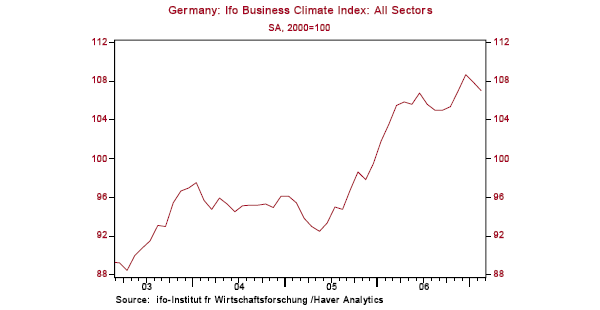
As generally expected, German business sentiment slipped a little further in February, with the Ifo research institute's business climate index dipping to 107.0 from 107.9 in January. As Ifo's economists pointed out, some fall was expected after the three percentage point hike in the VAT rate that took effect in January (taking it to 19%), and a slide of less than a point is hardly dramatic. Overall, the level remains well above the long-term average.
Saturday, February 24, 2007
US Housing Market Cracks Extend to Major Banks / Housing-Market / Analysis & Strategy
By: Jim_Willie_CB
Words from older European sage economists are as welcome to the mainstream financial circles as welcome as leisure suits and hot pants are to the fashion set, as eight track tape sets are to the home music systems, as old Model T Fords are to the classic car vogue (see the Chevy Powerglide).
Yet the wisdom of economist teachings from Old Europe has never lost its meaning. Almost half a century ago, Rothbard warned of booms and busts, noting the inevitability of a dissipated bubble whose occurrence is assured like night follows day. Advising against bubbles is so passé these years. Try telling a PhD Economist from a top US university of the dangers from excessive monetary inflation, the attendant risks for making asset bubbles, and (s)he will think you are crazy. On a couple of occasions, such has been my pleasure and disconcerting experience.
Read full article... Read full article...
Saturday, February 24, 2007
A Dangerous Central Bank Party - The World is Awash with Easy Money / Economics / Analysis & Strategy
By: Money_and_Markets
Mardi Gras 2007 just wrapped up. The revelers have gone home. The garbage is being swept up. The Big Easy won't be hosting another one of its famous parties until next year …
But the world's central bankers? They aren't putting away the party beads or the booze. Instead, they're still doling out the easy money and saying, “Laissez les bon temps rouler!” (“Let the good times roll!”)
Now, there's nothing inherently wrong with a party. But there's also a time and place for a celebration. And in a moment, I'll tell you how the parade could careen out of control.
Read full article... Read full article...
Saturday, February 24, 2007
Is the US Federal Reserve finally losing its Inflation Credibility as Gold Soars / Economics / Analysis & Strategy
By: Peter_Schiff
With Wednesday's data release that showed that the increase in “core” CPI in January was higher than expected, the price of gold soared by over $20 per ounce to just shy of $680 per ounce, a new nine-month high. As this is the reaction that most market watchers would have expected, it is not surprising that these movements failed to inspire much interest.
After all, gold is an inflation hedge, so any sign that inflation is worsening should be positive for gold prices. However, what is surprising is that this is one of the few recent occasions when the gold market has actually behaved logically in this regard. Could it be that some whiff of sanity has arrived on Wall Street?
Read full article... Read full article...
Friday, February 23, 2007
UK: BOE MPC Minutes and Data Point to One More Rate Hike / Interest-Rates / Analysis & Strategy
By: Victoria_Marklew
The minutes of the February 8 meeting of the Bank of England's Monetary Policy Committee (MPC) showed a 7-2 vote to leave rates on hold this month. The two members in favor of another hike thought that the 75bp of tightening since last August was too modest given the rise in inflation. The majority were concerned that a closely-spaced series of rate increases could lead to "excessive tightening."
However, the members seem still to be concerned about medium-term inflation risks, a concern also underlined in last week's Inflation Report (see Daily Global Commentary, February 14: " Bank of England Says One More Rate Hike Will be Necessary "). All told, the minutes, along with data releases of the past few days, point to another rate increase - but probably not until the April 5 or May 10 meeting.
Read full article... Read full article...
Friday, February 23, 2007
Economic Summits, China Trade War, and the Gold Bull Run / Economics / Analysis & Strategy
By: Jim_Willie_CB
Numerous international events took place within the last month. The Economic Summit was held in Davos Switzerland. It convened a large collection of world renown economists, corporate chieftains, and some financial market kingpins. The G8 Meeting of finance ministers was held in Germany. Back home, USFed Chairman Bernanke issued a grave warning to the US Congress on the shattered US financial balance sheets. My commentary on money supply explosion comes next.
Lastly, the Chinese trade disputes have taken a big step toward outright trade war and protectionism. Few see how the trade war will affect gold yet. They will soon enough. Restricted trade flow always results in higher prices. It is always accompanied by a scramble for resources in today's context. This trade war will include a massive bidding war and staggering battles to build stockpiles of all critical commodities.
Read full article... Read full article...
Thursday, February 22, 2007
The New World Economy Part 2 - A Rejoinder to Mohamed El-Erian / Economics / Analysis & Strategy
By: Douglas_V_Gnazzo
This is the second article in a series of three papers, which collectively comprise the complete rejoinder to Mr. Mohamed El-Erian's article: Complex Finance and the Brave New World Economy .
The same format used in the first paper will be utilized again. The article will be broken down into paragraphs, followed by a synopsis of the main points of each paragraph, and then comments. This focus on each individual paragraph separately, facilitates an easier understanding and discussion of the complex issues involved.
Once again I would like to emphasize that this rejoinder is to what was said - not to who said it. Mr. El-Erian is a great scholar recognized and respected around the world. This is not personal, it is simply business.
Read full article... Read full article...
Wednesday, February 21, 2007
Housing Market Subprime Mortgages Timebomb waiting to Explode / Housing-Market / Analysis & Strategy
By: Michael_K_Dawson
Remember when a 20% down payment was expected when purchasing a house. Sometimes with stellar credit and maybe a special situation, like a first-time home buyer, you could get in with a 10% down payment. I recall a few weeks after my wife and I purchased our first home - both cars broke down.
Saving for your first home is one of the few times, from a financial perspective, that both husband and wife are clearly on the same page. Everything takes a back seat to saving for that down payment - shoe shopping, night out with the boys, everything. That's exactly why both of our cars broke down. We had neglected maintaining the cars and everything else while saving for our down payment.

Saturday, February 17, 2007
US Recession - Gold, Housing and the Inverted Yield Curve / Economics / Analysis & Strategy
By: John_Mauldin
I have often written about the high probability of a recession following an inverted yield curve (where short-term rates are higher than long-term rates), based upon research which suggests the yield curve is our most reliable indicator of future recessions.
I am often asked whether a yield curve causes a recession. The (very) short answer is no. But then what is the mechanism that makes it so reliable? Is it different this time? How can we believe that the economy has a few bumps in its future when things are just so darn good? We ponder these questions in today's letter, as well as peruse the "shocking" housing data released this morning, and look at a very interesting chart on gold.
Read full article... Read full article...
Saturday, February 17, 2007
Investing in the Stock Market - Signs of Trouble ? / Stock-Markets / Analysis & Strategy
By: Hans_Wagner
When investing in the stock market it is important to balancing the risks with the potential rewards, if you want to beat the market . Today, we face a world of low yields and relatively high valuations. Most of the stock markets in the developed world are near their long-term highs in terms of valuation. As many investors know and numerous studies have shown stocks offer lower than normal returns after reaching high valuations.Read full article... Read full article...
Saturday, February 17, 2007
US Housing Market Subprime Mortgage debacle unfolding as expected ! / Housing-Market / Analysis & Strategy
By: Money_and_Markets
Virtually every single prediction I made about the subprime mortgage industry over the past year is coming true. In a moment, I'll tell you what this means to you if you're buying or selling a home, or even just looking at investments in the housing and mortgage markets.
But first, I'd like to tell you how things have been unfolding ...
In June 2006, I said: “Real estate is already starting to fall apart all around us ... Prices on a wide variety of properties are going to fall in vast swaths of the U.S. ... Defaults and foreclosures are going to skyrocket.”
Read full article... Read full article...
Friday, February 16, 2007
US Selling Assets for Consumption - BHP Bid for Alcoa / Economics / Analysis & Strategy
By: Peter_Schiff
On Tuesday of this week we learned that in 2006 Americans racked up a record $763.6 Billion trade deficit, and that two Australian mining firms, Rio Tinto and BHP Billiton, were each contemplating $40 billion bids for U.S. aluminum giant Alcoa. Not only did Wall Street and the media fail to grasp the negative significance of each story, but they also failed to see the strong connection between the two.Read full article... Read full article...
Friday, February 16, 2007
How the Dow Jones is getting killed - Due to loss of purchasing power / Stock-Markets / Analysis & Strategy
By: Money_and_Markets
If you think the U.S. stock market is doing okay, I hope you're sitting down. In this issue, I'm going to give you information that will shatter that myth and pin your eyes wide open. And if you're heavily invested in stocks, don't worry. By the end of this article, I'll give you some steps you can take to protect yourself.
Let's start with a chart that I've made for you. It shows the Dow Jones Industrials from January 3, 2000 to February 6 of this year, and it is expressed in terms of the number of ounces of gold that the Dow can purchase.
Read full article... Read full article...
Tuesday, February 13, 2007
One great way to make money ... Trade Between China and Brazil / Stock-Markets / Analysis & Strategy
By: Money_and_Markets
One great way to make money is to scour the globe ... find a unique point where two powerfully positive forces come together ... and then choose the investments that are most likely to convert those forces into profits.
That's what I've done. And I'm going to give you some of the results this morning.
Read full article... Read full article...
Monday, February 12, 2007
Tariffs against China will hurt the USA more than China / Economics / Analysis & Strategy
By: Peter_Schiff
During recent testimony before the hostile Senate Banking Committee, Treasury Secretary Henry Paulson sought to justify the Bush administration's China policy. Predictably, the unmoved senators responded with threats of tariffs should China continue to restrain the yuan, and warned of the negative consequences of restricted access to American consumers. Needless to say, China need not lose any sleep over this bombastic posturing.Read full article... Read full article...
Monday, February 12, 2007
Stock Market is Overbought, Overvalued and Overbullish / Stock-Markets / Analysis & Strategy
By: John_Mauldin
Are we overbought and overvalued? Maybe. Is inflation coming under control? Maybe not. Did housing construction rebound last month? No. The only rebound was in the statistics. (I know readers will be shocked to learn that some statistics just may not actually be what the headline says.) We look at all this and more as we ponder a world awash in liquidity.Read full article... Read full article...
Sunday, February 11, 2007
Irrational Exhuberance In China's Stock market / Stock-Markets / Analysis & Strategy
By: Peter_Schiff
Recently voiced concerns from the Chinese government that their surging domestic stock market was crossing into bubble territory helped to set off last week's sharp decline, including a single day plunge of 6.5% (the equivalent of more than 800 points on the Dow Jones.) While a bubble may indeed be forming in Chinese stocks, my guess is that there is room for a lot more air before it finally pops.Read full article... Read full article...
Sunday, February 11, 2007
A Raging Bull - Africa, Nanotechnology and the Danger of Sub-prime US mortgages / Stock-Markets / Analysis & Strategy
By: John_Mauldin
This week I am in South Africa. At the moment I am literally flying from Johannesburg to Durban in a single-engine Pilates PC 12, a very upscale Swiss-manufactured plane. I am told pilots will know and appreciate the plane. It is supposedly the safest plane in the world, which is somewhat comforting as we bounce through a few storm clouds (and thunderstorms later tonight of the way to Cape Town!). My business partners and hosts, Dr. Prieur du Plessis and Paul Stewart of Plexus Asset Management, have kept me busy, but it has been fun.Read full article... Read full article...
Friday, February 09, 2007
Davos - The Brave New World Economy: A Rejoinder to Mohamed El-Erian / InvestorEducation / Analysis & Strategy
By: Douglas_V_Gnazzo
Recently, the shakers and the movers of the world met in Davos, Switzerland for their yearly meeting. It is here that the world's elite discuss the state of the world, the future course of world affairs they wish to see manifest as destiny, and the wherewithal to make it all happen.
One of the tools the elite have always used to forge the works wrought from the anvil and the hammer is the intelligentsia - the counsels of Aries. This work speaks to those who listen to the Ram, and have occasion to frequent the House of Mars. It would be wise to heed the words:
Read full article... Read full article...
Thursday, February 08, 2007
US Federal Government Fails Audit - $54 trillion debt / Economics / Analysis & Strategy
By: Money_and_Markets
Want a great reason to own gold? Then consider the following quote from the Government Accountability Office (GAO). I'm taking this from the agency's December report on the government's financial statements: “A significant number of material weaknesses related to financial systems, fundamental recordkeeping and financial reporting, and incomplete documentation continued to ... hinder the federal government from having reliable financial information to operate in an economical, efficient, and effective manner.”
The report goes on to say that the federal government cannot reliably report a significant portion of its assets, liabilities, costs, and other related information ...
Read full article... Read full article...
Thursday, February 08, 2007
Crude Oil Production Means Investment - Iran and Venezuela are Failing to Invest / Commodities / Analysis & Strategy
By: Elliot_H_Gue
Here's a challenge for you: Name the top three largest oil-producing countries in the world.If you're like most investors, you probably know that the world's largest oil producer is Saudi Arabia. In 2005, Saudi Arabia churned out more than 11 million barrels of oil per day, roughly 13.5 percent of the world's total supply. And you may have guessed the world's second-largest producer: the Russian Federation. In 2005, Russia chipped in about 9.5 million barrels per day, a bit more than 12 percent of the total global production.
But guessing the world's third-largest producer is more of a challenge. If you guessed Nigeria, Venezuela, Iraq, Iran, the United Kingdom or Canada, you're incorrect. The third-largest oil producer in the world is the US. The US produced 6.8 million barrels of oil per day in 2005, edging out Iran by more than 2.75 million barrels per day.
Read full article... Read full article...
Wednesday, February 07, 2007
Greenspans Cheap Money role in the US Housing Crash of 2007 / Housing-Market / Analysis & Strategy
By: Mike_Whitney
The American people appear to be oblivious to the economic hurricane which is expected to touchdown in late 2007. That's when $1 trillion in ARMs (Adjustable Rate Mortgages) will “reset” triggering a massive increase in foreclosures and plunging the country into a deep recession. If energy costs continue to rise at the same time or if the dollar loses more ground, we may be rooting around in the backyard garden-plot looking for passed-over spuds and radishes.
“The Fed, in effect, has become a serial bubble blower.” Stephen Roach, chief economist, Morgan Stanley
“This is the biggest housing slump in the last 4 or 5 decades: every housing indicator is in free fall, including now housing prices.” Economist Roubini Nouriel, Dow Jones, 23 August 2006
Tuesday, February 06, 2007
Market Mania in Crude Oil, Base Metals, Tokyo Gold, Yen and China / Commodities / Analysis & Strategy
By: Gary_Dorsch
The name “Einstein” is synonymous with great intelligence and genius. Albert Einstein was named Time magazine's "Man of the Century,” because he transformed humankind's understanding of nature on every scale, from the smallest to that of the cosmos. Einstein's theory of relativity is embodied in all motion throughout the universe, and the nature of energy, matter, motion, time, and space.Unfortunately, Einstein didn't take a fancy to studying the daily motion of commodity and stock markets, where wild and erratic gyrations often seem to have no logical explanation. Why did the zinc market soar nearly 400% due to fast shrinking supplies, only to surrender a third of its gains, over the past two months? How do some copper miners defy the laws of gravity and climb to record highs, even after the price of copper has dropped by almost 50% below its all time highs?
Read full article... Read full article...
Monday, February 05, 2007
US Recession in 2007 - Third Leg of the Bear Market Likely / Economics / Analysis & Strategy
By: Paul_Lamont
As our clients know, we have been forecasting a very hard recession over the next few years. At the beginning of 2006, our analysis was viewed with skepticism, but as more data comes in from the recent performance of the economy, our forecast is becoming more probable.
Debt
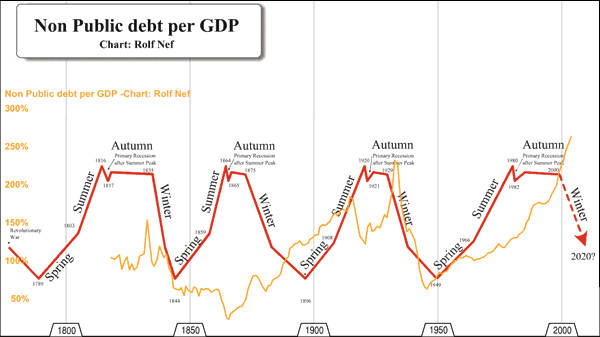
One of our main arguments has been that U.S. consumers are holding unsustainable levels of debt. The chart below from Ian Gordon, from The Long Wave Analyst shows private debt levels to GDP overlaid with his interpretation of the Kondratieff Wave. Without giving a lengthy description of the Kondratieff Wave, let us just say that as interest rates fall, investors are willing to take on more debt. Much of this credit is spent or used to fuel asset bubbles. Eventually bubbles exhaust themselves and deflate assets but debt is still owed. Participants must default on their debts causing loss of faith in financial institutions and subsequent depression. As you can see debt is now 300% of GNP, much higher than in 1929.
Sunday, February 04, 2007
The USA and Saudi Arabia Combat the Axis of Oil - Iran, Russia and Venezuela / Commodities / Analysis & Strategy
By: Gary_Dorsch
Crude oil is the key weapon in the battle between Saudi Arabia, Kuwait, and the UAE, aligned with the United States, against the “Oil Axis” of Iran, Russia, and Venezuela. The Persian Gulf Oil kingdoms fear the emergence of a Tehran-led axis linking Iran, Iraqi Shiites, Syria, Lebanon's Hezbollah, Palestinian Hamas in Gaza, and Islamic militants linked to al Qaeda trying to topple the Saudi royal family.Earlier this month, Riyadh fired the first shot in the war against Iran, by knocking the price of crude oil to as low as $50 per barrel. The goal is to squeeze Iran's budget and wreck havoc on its economy, as much as possible, before the Ayatollahs can get their hands on the nuclear bomb. According to a Jan 24th report in the UK Telegraph, that indicated North Korea is helping Iran to prepare an underground nuclear test similar to the one Pyongyang carried out last year.
Read full article... Read full article...
Sunday, February 04, 2007
US Housing Market- The Mother of All Bubbles / Housing-Market / Analysis & Strategy
By: Mike_Whitney
The Fed should have tightened earlier to avoid a festering of the housing bubble early on. The Fed is facing a nightmare now: the recession will come and easing will not prevent it.” Nouriel Roubini, “Fed Holds Interest Rates Steady as Slowdown Outweighs Inflation”, Wall Street JournalI'm really baffled by the e-mails I've been getting lately. A lot people have been blasting my predictions that the housing bubble will burst in 2007 and trigger a deep and painful recession. They point to the Commerce Dept's recent report that “new home sales rose 4.8% in December after 7.4% increase in November.”
Read full article... Read full article...
Saturday, February 03, 2007
Weak US Payrolls - Goldlilocks to Feel the Chill / Economics / Analysis & Strategy
By: Ashraf_Laidi
Just as the term "Goldilocks" becomes the latest buzz in economic headlines, the real data are gradually leaning to the softer side, allowing Goldilocks to finally feel the cold as more seasonal temperatures start to erode the aberration from abnormally warm weather. But it is not all about weather. The FOMC has finally reduced its preoccupation with inflation at the same week when manufacturing indices dropped back into recessionary levels. The stronger than expected advanced Q4 GDP tells an incomplete tale on a quarter that is already behind us. Softer than expected payrolls and rising unemployment rate both merit closer scrutiny.Read full article... Read full article...
Saturday, February 03, 2007
The USA is Driving towards National Bankruptcy / Economics / Analysis & Strategy
By: Dr_Martenson
I have a question for you. Let's say you're driving down the road, at night, along a busy highway, 10 miles from the next exit, and the oil warning light suddenly blinks on. What do you do? Are you the sort that pulls over or keeps on driving? If you're the sort that keeps on driving, upset mainly because you don't have any black tape to put over that pesky red light, then you might as well stop reading right now because we're about to pull over.
First a set of definitions; when liabilities exceed assets by an amount that cannot be serviced by any conceivable future revenue stream, then one is said to be ‘insolvent'. When current cash flow cannot service current debt payments, then we say an entity is technically bankrupt. And finally, when a debt payment is missed, then a default has occurred, the entity is actually bankrupt and all sorts of legal machinery kicks into high gear.
Read full article... Read full article...
Thursday, February 01, 2007
US Housing Bubble Bloodbath - The Property Crash Continues / Housing-Market / Analysis & Strategy
By: Mike_Whitney
“The crash of the housing bubble will not be pretty. Millions of people stand to lose their homes and life savings. However, it was inevitable. The bubble created a fantasy world that could not continue. At the peak of the bubble, 160,000 people a week were buying a home, most at bubble inflated prices. The longer the bubble persists, the larger the group of people who paid way too much for their home. While it is not good that so many dreams had to be ruined, the number will be even larger if the bubble deflates slowly. So I make no apologies about hoping for the hasty demise of the bubble.” Read full article... Read full article...
Thursday, February 01, 2007
Bubbles and Crowd Madness - Internet Bubble 2.0 - 2007 compared with 2000 / InvestorEducation / Analysis & Strategy
By: Paul_Lamont
During the early 1690s, England experienced a 'Financial Revolution.' It was described by financial historian Edward Chancellor as "a wave of exciting new technology companies coming to market, of rising share prices and record stock turnover, of new fangled financial derivatives, of credit wildly extended, of stock market rumours and sharp practices, and of naïve investors rushing to buy shares."
Sound Familiar? Shortly after in 1695, the English stock market peaked and subsequently crashed. Simultaneously it was recorded that "women's fashionable headdresses which reached a height of 7 feet" during the mania became shorter and more somber. While this may seem a ridiculous coincidence, extravagance in culture and fashion historically coincides with the peak of a mania.
Read full article... Read full article...
Thursday, February 01, 2007
How Central Bankers are Stealing Your Money - Money Supply Inflation / Economics / Analysis & Strategy
By: Money_and_Markets
You've heard me say it many times before: Without a gold standard, central bankers are free to print money and credit like crazy to inflate their economies … avoid recessions … and to pay off governmental debts.
The problem with this is that it's always done at your expense! Central bankers don't suffer the consequences. Neither do those in the government. But you sure do!
The purchasing power of your currency declines …
Your cost of living rises …
Read full article... Read full article...
Wednesday, January 31, 2007
Winning the Global War for Natural Resources / Commodities / Analysis & Strategy
By: Money_and_Markets
Although Hezbollah, al-Qaeda, and the war in Iraq often grab the headlines, I think the global battle for natural resources will probably define the 21st Century when it's all said and done. This war isn't fought with bullets … yet. Instead, it's fought with contracts and trade agreements as countries like China, India, Russia — and, yes, the U.S. — struggle for economic hegemony.
Here are just a few of the latest moves ...
Read full article... Read full article...
Wednesday, January 31, 2007
The Dismal Science of Phony Money: A Rejoinder / Economics / Analysis & Strategy
By: Douglas_V_Gnazzo
John Maynard Keynes was a champion of the elite money changers, an intelligentsia proponent of the dismal science of phony money - a hired gun. Keynes did not get much right regarding monetary theory, however, in one of his more lucid moments he hit the mark when he stated: "Lenin was right. There is no subtler, no surer means of overturning the existing basis of society than to debauch the currency. The process engages all the hidden forces of economic law on the side of destruction, and does it in a manner which not one man in a million is able to diagnose." [2] Read full article... Read full article...
Tuesday, January 30, 2007
Central Bankers Warn of an Impending US Fiscal Crisis - Feds Bernanke, ECB's Trichet / Economics / Analysis & Strategy
By: Dr_Martenson
This past week, Ben Bernanke warned the US Congress that our nation faces a ‘fiscal crisis' if the out of control spending habits of Washington aren't soon curbed. I suspect he used the word ‘curbed' quite deliberately as the politicians starting back at him probably looked like a row of dogs listening to white noise. Can't you just picture it? A bunch of congressional heads all tilted to the side with studious expressions on their faces, but a stylized question mark floating in a little text balloon over each of their heads?

Monday, January 29, 2007
The Real International Price of Silver / Commodities / Analysis & Strategy
By: Robert_Watson
What is the real price of an ounce of silver and just how widespread should a silver bull market be? We have watched over the last few years as the price of silver in US dollars has marched upwards from the lows of $4 to the recent highs of $15. However, the good luck of silver has been mainly laid at the door of the bad luck of US dollar. The US dollar depreciates and hence the price of silver in US dollars appreciates. Seems a simple enough equation, but surely a real bull market will stand on its own merits and not on the misfortunes of another? With that in mind, is silver worth investing in by lovers of silver from other countries across the globe?Read full article... Read full article...
Sunday, January 28, 2007
US Housing Slump Continues - Boom Bust Cycle - Silicon Valley Housing Market Report / Housing-Market / Analysis & Strategy
By: Jas_Jain
In this report you will see facts, based on the available data, that you will not find anywhere else. Vast majority of economists and statisticians who prepare housing reports are "professionals" that get paid to talk up the game. This is a NO BULL! report. The purpose of this report is to not only present the facts but also a commentary on the mindset of people who live there. Just to give you some flavor of the facts, how many people know the following (all home prices are median price)?
Price change, during Apr'00-Dec'06 (80 months), for all homes sold in Santa Clara County = 35%.
Price change, during Apr'00-Dec'06, for all homes sold in Los Angeles County = 165%.
Price change, during Apr'00-Dec'06, of the US Treasury STRIPS in my IRA account = 70%.
Read full article... Read full article...

Friday, January 26, 2007
Reband your house and get thousands back off of your Council Tax payments and cut your annual Council Tax bill by hundreds / Personal_Finance / Analysis & Strategy
By: Shahla_Walayat
Council tax payers have the opportunity to have their properties rebanded and to have their council tax bill cut by £300 or more per year, in addition to receiving a repayment of the amount overpaid since 1991. Literally thousands of Council tax payers are having their houses rebanded lower and receiving thousands in repayments.

Friday, January 26, 2007
Low US interest rates ignited unsustainable asset bubbles - Connecting the dots / Interest-Rates / Analysis & Strategy
By: Dr_Martenson
Can you possibly stand another article about Greenspan? If the answer is “no” I completely understand – I too am ready to let the man take his place in history next to the buggy whip – but he was responsible for something that will be resonating in your life for a very long time.
Since I've already typed two complete sentences and am still on topic, I think it's time for a detour. So let me tell you that I am cursed with a brain that connects dots. Worse, my brain likes to store things up as though random news items were potatoes and a particularly vicious Polish winter were on the way. The fact that I live in the US only confuses things all the more.
But that's not the point. The point is that Alan Greenspan is either depraved or a fool and, of the two, I am not sure which I feel worse about as describing the man who was at the helm of the monetary bobsled during the longest stretch of paper credit expansion the world has ever seen.
Read full article... Read full article...
Monday, January 22, 2007
Gold Analysis - Rumors of Metals' Demise are Greatly Exaggerated! / Commodities / Analysis & Strategy
By: Dominick
Even after last week's rally, there is still talk about the run in commodities being finished. If you watched CNBC, you heard over and over that money had rotated out of commodities and into tech and, later, into retail. But, as we proudly boasted last week, even in the midst of this so-called "collapse", gold and silver never broke their psychological $600 and $12 support levels. And the action since last weekend's update fit the proscription very closely. We said:
The daily charts below reveal that GLD is now very close to resistance at its 50-day moving average. A convincing move to $63 in the ETF would echo the signal that the spot market has cleared a path to $640 gold, but it will take more than technical impetus alone.
Read full article... Read full article...
Saturday, January 20, 2007
Leveraging Silver Investments with Silver Stocks / Commodities / Analysis & Strategy
By: Robert_Watson
I talked a couple of weeks back about how silver could be used to leverage the price of gold but what about silver mining stocks leveraging the price of silver? In that previous article a four-year rolling leverage of silver over gold was calculated to show how silver either out-performed or under-performed gold as bull markets waxed and waned. Applying the same principles, we have the following 4-year leverages for the mining companies that make up The Silver Analyst Stock Composite Index. The stocks are listed according to performance. The record maximum leverage is given to the right as well as the date on which it occurred.Read full article... Read full article...
Saturday, January 20, 2007
History's Hidden Engine - Documentary that shows how Stock Market Trends influence societies moods / InvestorEducation / Analysis & Strategy
By: Sarah_Jones
History's Hidden Engine explores society's moods and how shifts in overall mood affect areas as disparate as fashion, movies, politics, the economy and the tendency to make war. Moore says he was inspired to create the movie by "Popular Culture and the Stock Market," a report by financial analyst Robert Prechter. Moore quickly realized that "the ideas behind this field are too new and complex to explore in every aspect in a single documentary." Nonetheless, he liked the challenge of creating a film that includes the views of an increasing number of experts who are looking into the emerging theory called socionomics.Read full article... Read full article...
Friday, January 19, 2007
The liquidity bubble, from real estate to bonds to stocks... / Economics / Analysis & Strategy
By: Adrian_Ash
Fancy a St.Tropez villa with its own infinity pool? Keep an eye on the junk bond market...THE REAL ESTATE AGENT blinked into the warm winter sunshine.
"In 34 years in the St.Tropez market I've never known anything like it," he smiled.
Interviewed for British television, the realtor looked every inch 'old money'. But he didn't mind the nouveau riche of bonus-rich bankers and traders now driving property prices higher in the South of France.
Every villa he showed to the film crew came with an infinity pool and a view to die for. None of them cost less than $3 million. Read full article... Read full article...
Friday, January 19, 2007
No Fed US Interest rate cut in sight ! / Interest-Rates / Analysis & Strategy
By: Money_and_Markets
That Federal Reserve Board rate cut? The one Wall Street's been forecasting for months? The one that's supposedly right around the corner?
Forget about it!
The latest economic numbers say it ain't happening. The latest moves by foreign central bankers make it unlikely. And as far as I'm concerned, the Fed is pretty much treading water in an ongoing flood of easy money into the asset markets.
Thursday, January 18, 2007
Precious Metals Warrants Index - Investment Performance 2006 / Commodities / Analysis & Strategy
By: Dudley_Baker
Investors are bombarded these days with new indices and ETF's on virtually all kinds of different mixes of the same information. Most have similar performance levels and must be rather confusing to most investors. We at Precious Metals Warrants have our own index ( PMWI ) for which we just completed our analysis for 2006. You will find no other index similar to ours, guaranteed. Currently, this index is our own proprietary index and cannot be bought and is being reported only on a yearly basis, last year 2005 being the first year.Read full article... Read full article...
Wednesday, January 17, 2007
Leveraging Gold Investments with Silver / Commodities / Analysis & Strategy
By: Robert_Watson
If you have been a regular reader of the various precious metal websites, you will know that gold is the metal that dominates the discussion. This should not surprise us. Despite that fact that less than 2,500 tonnes of gold are mined out of the ground each year as opposed to the 20,000 tonnes of silver, it is market cashflow that matters and a look at the recent statistics of the international London bullion market shows that in November 2006, $12.1 billion worth of gold was cleared through that city as opposed to $1.41 billion worth of silver. Clearly, when it comes to business transactions as well as Internet chat, it is gold that talks louder than silver.Read full article... Read full article...
Friday, January 12, 2007
US housing market - Subprime lending sector spiraling south ! / Housing-Market / Analysis & Strategy
By: Money_and_Markets
ContiFinancial ... EquiCredit ... The Money Store ... Southern Pacific Funding. Maybe you've never heard of them, but they were the subprime mortgage lending stars of the mid-to-late 1990s.
They specialized in making loans to borrowers with bad credit, little or no down payments, and a host of other problems. Once they made loans, they'd sell them off to Wall Street firms and other investors, who would help package them together into bonds — a process known as “securitization.” The subprime lenders would use the proceeds to make additional mortgages, and the process would start all over again.
Read full article... Read full article...
Wednesday, January 10, 2007
What’s Behind the Crash in Crude Oil ? / Commodities / Analysis & Strategy
By: Gary_Dorsch
Is it enough to point the finger of blame for the latest crash in crude oil on the arrival of global warming? Unusually warm weather in Russia, Europe, and the United States, with temperatures reaching the upper 60’s in New York’s financial district, weakened global demand for heating oil by 23% below normal last week, and a 30% drop in heating oil demand is also expected in the days ahead.Quite often, markets seem designed to fool most people most of the time. Global economic growth and oil demand growth are usually linked, so given expectations for global GDP growth of 4.4% in 2007, it’s logical to expect global demand for crude oil to increase by at least 1.2 million barrels per day (bpd) this year. However, that would fall short of 1.8 million bpd of new oil supplies that OPEC expects to come on stream from Angola, Brazil, Canada, Kazakhstan, and Russia this year.
Read full article... Read full article...
Wednesday, January 10, 2007
Is the Commodities Bull Getting Buried Under the US Housing Rubble? / Commodities / Analysis & Strategy
By: Jas_Jain
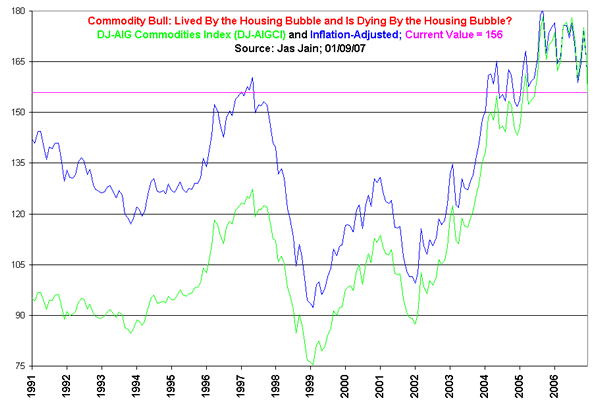
Is the Commodities Bull Getting Buried Under the US Housing Rubble?
Please look at the following graph and see if you can spot correlation between the US Housing Bubble and the DJ-AIG commodity index (DJ-AIGCI, a balanced index of various complexes) bubble of recent years.
Saturday, January 06, 2007
The global liquidity pyramid is stopping the US Dollar from collapsing / Currencies / Analysis & Strategy
By: Adrian_Ash
What's stopping the US Dollar from doing what it must – and collapsing...?
"Global demand for the Dollar is now driven by the explosion in Dollar-denominated assets," writes Dan Denning from Melbourne, "almost completely out of the control of central banks."
Read full article... Read full article...
Saturday, January 06, 2007
Quantum finance and the scramble for gold / Commodities / Analysis & Strategy
By: Adrian_Ash
If you can't spot the patsy, then it must be you, says Adrian Ash. Get ready for the next raft of post-Crash regulations...Only in finance do the losers get to write history. The government then prints their memoirs in the statute books, while a new volume of folly and greed is begun.
Witness Barnard's Act of 1734. It sought "to prevent the infamous practice of stock-jobbing" that had peaked and exploded with the South Sea Bubble of 1720. Investors had long since fled Change Alley, however, and gone back to trading government bonds instead.
Read full article... Read full article...

Saturday, January 06, 2007
The year of the deal - Mergers & Acquisitions Boom time / Companies / Analysis & Strategy
By: Den_Denning
2006 was clearly the year of the deal. The Australian mining sector alone saw A$145 billion in deals. According to Friday's Australian, investment banking firms did nearly 3,000 buyouts or mergers in 2006, with the top ten firms doing nearly $166 billion in deals.So what's next? Has all the low-hanging fruit been picked? You'd think all the obvious deals have been done by now. With the cost of capital low, any under-valued firms with reliable cash flow have already been targeted. There are only so many firms where you can cut costs, find synergies, or operate more efficiently so that you generate a 15-20% return on your investment in a few years. Now that the big fish have been taken, it's time to look for littler fish.
Read full article... Read full article...
Friday, January 05, 2007
U.S. economy is fizzling whilst Stock Markets are sizzling ! / Economics / Analysis & Strategy
By: Money_and_Markets
You know what I think of when I look at the U.S. markets right now? The Charles Dickens' masterpiece, A Tale of Two Cities . Here's why ... For many parts of the “real” U.S. economy — America's factories, employers, shopping malls, and homeowners — it's looking like the worst of times.
Signs of an economic slowdown are everywhere:
Read full article... Read full article...
Thursday, January 04, 2007
Dow Jones Stock Market Shocks during 2007 / Stock-Markets / Analysis & Strategy
By: Money_and_Markets
We've had almost four years of relative calm in the financial markets. Corporate earnings have rebounded from the depths of the 2000 — 2001 stock market collapse. There have been no terror attacks on U.S. soil. Interest rates have remained artificially low.
But now, even as foreign economies are gaining in strength, the U.S. economy's second-breath — as I call it — is ending. Coming next — a series of shocks in the Dow Jones Industrials that could catch investors with their pants down.
Read full article... Read full article...
Wednesday, December 27, 2006
Emerging Markets - Chinese Red-chips Soar into Orbit, is Gold Next ? / Stock-Markets / Analysis & Strategy
By: Gary_Dorsch

Tuesday, December 26, 2006
American companies missing the boat when investing in China ! / Companies / Analysis & Strategy
By: Money_and_Markets
The six Chinese office workers in front of me all ordered the same thing — a Chinese specialty called hot pot, a simmering fondue-like pot of aromatic and spicy stock that contains leafy vegetables, mushrooms, dumplings, meat, and/or seafood. It looked absolutely delicious and smelled even better. 'I want one of those,' I said to the cashier who couldn't speak a lick of English.
My host at the Zhang Jiang Hi-Tech Industrial Park cafeteria on the outskirts of Shanghai gently interrupted me. 'I suggest you make a different selection, Mr. Sagami,' he quietly warned. 'That is dog hot pot.'
'Dog? Dog as in woof woof? ' I asked.
Read full article... Read full article...
Saturday, December 23, 2006
A lesson from History Thailand's stock and currency market compared with 1997 / Stock-Markets / Analysis & Strategy
By: Money_and_Markets
Nine years, five months, and twenty days ago, Thailand revalued its currency, the baht. That one small move ultimately brought down stock markets, currencies, and economies throughout Southeast Asia and the world.
Now, Thailand is in the news again — implementing capital controls on international investors. Those rules would lock up a chunk of foreign investors' funds for a year in an attempt to curb currency speculation. But the circumstances of this new situation couldn't be more different from those of 1997. Instead of being provoked by a strong U.S. currency, Thailand is reacting to a weak dollar. That speaks volumes about just how far the once-mighty greenback has fallen.
Today, I want to look back at the fateful days of the 1997 Asian contagion ... compare it to the current situation ... and, most importantly, explain what it means for your investments.
Read full article... Read full article...
Thursday, December 21, 2006
Has the US Housing Market Bottomed ? Data and Fifth Grade Maths Says NO ! / Housing-Market / Analysis & Strategy
By: Jas_Jain
Act I. Scene - a fifth grade math class in a small farm town in MO.
'Good morning class.'
'Good morning, Mr. Scambuster.'
'What state we are in and what are we known for, Freckles?'
'Why, Missouri, sir. When shrills trained at Serve-the-Crooks League that you told us about try to tell us that this is so and that is so we turn around and ask, 'Show Me, buster.'
'Class, today we will learn how to apply the arithmetic that you have learned to the real world problems. Remember, when we took a field trip to the city and we saw lots of homes and condos going up everywhere? Remember, Tommy pointing to us that his uncle Kirk was building some of those homes? I also explained to you the process of getting permits to build homes, etc., on that trip. Well, today we will apply the simple arithmetic of addition and subtraction to this real life subject. I will draw a little table of the process of building new housing units.'
Read full article... Read full article...
Monday, December 18, 2006
Peak Debt - US Debt & GDP Growth / Economics / Analysis & Strategy
By: Jas_Jain
I am no expert on Peak Oil, but Peak Oil is not the urgent problem that the world faces, economically, or politically. The problems of the supply-demand of oil will play out over a longer period and its effects would be spread over a longer period of time than that of the Peak Debt, which are lot more immediate. As a matter of fact, it has been the rapidly rising debt (racing towards the peak), which in turn has "fueled" a worldwide construction boom, that has resulted in the high prices for oil over the past 4 years and not the realization of the problem of Peak Oil. During the coming global depression, within this decade, the price of crude oil should fall below $25 a barrel and there will be glut due to sharply falling demand. I realize that these are not the concerns that people have today as long as the American consumer keeps borrowing. But, for how long?Read full article... Read full article...
Sunday, December 17, 2006
Money is too Important to Trust with Central Bankers ! / Interest-Rates / Analysis & Strategy
By: Gary_Dorsch
The late Nobel Economic laureate Milton Friedman once remarked, “Money is too important to be left to central bankers. You essentially have a group of unelected people who have enormous power to affect the economy. I’ve always been in favor of replacing the Fed with a laptop computer, to calculate the monetary base and expand it annually, through war, peace, feast and famine by, perhaps, a predictable 2 percent,” Friedman said.Financial chiefs from the Group of 20 industrialized and emerging economies could hardly believe their good fortune, as they huddled behind closed doors on Nov 19th. Central bankers from Great Britain, Canada, France, Germany, Italy, Japan and the United States, and 13 emerging economies, including Australia, Brazil, China, India, Russia and South Korea, implemented a joint strategy six months ago to derail the “Commodity Super Cycle”, and they hit pay dirt in the Fall of 2006.
Read full article... Read full article...
Friday, December 15, 2006
Three Asian Mega-Trends ! / Economics / Analysis & Strategy
By: Money_and_Markets
I've spent the last 21 days traveling throughout Hong Kong, Tokyo, Shanghai, Singapore, Shekou, Bangkok, Macau, and Shenzhen. My goal: Seeking out the very best investment opportunities. It's been a long and exhausting trip. But I've found dozens of fast-growing businesses with skyrocketing profits. In fact, my biggest problem is that I have to narrow down this big platter of opportunities to just the few very best ideas.Read full article... Read full article...
Thursday, December 14, 2006
Graphic Illustration That Scam Lovers Are the Real Turkeys - S&P PE Ratio and Earnings / Stock-Markets / Analysis & Strategy
By: Jas_Jain
Let me remind everyone that all commentaries on politics, economics and investments are about the behavior of the participants, leaders and the led. For the past dozen years, Americans have displayed clear signs of blind faith in one particular human institution - the so-called stock market, which was turned into the Scam Market via the Scam Options fraud that was initiated by collusion between the Corporate Chieftains and the regulators, the Congress and the SEC, who are supposed to protect the investors. Those who still have faith in the current Scam Market, despite all the abuses that has come to fore, are Scam Lovers.Read full article... Read full article...
Thursday, December 14, 2006
Facts On US Housing Boom-Bust Cycles and Recessions / Housing-Market / Analysis & Strategy
By: Jas_Jain
No one denies that housing in the US has been cyclical with huge swings in the new construction as well as resale activity (both showing a high correlation with each other). Establishment no longer denies that there was a housing bubble during the past four years and that it has begun to burst. However, the establishment, led by the Federal Reserve, assures the public of a "soft-landing." Some even point to "the mid-cycle slowdown during 1995" without pointing out that there was no housing boom preceding that slowdown and, hence, no housing-led recession to follow.Read full article... Read full article...
Thursday, December 14, 2006
US Employment and Recessions (Short and Sweet'): A Picture Worth Thousand Words / Economics / Analysis & Strategy
By: Jas_Jain
When Wall Street and Federal Reserve economists point to the current employment growth as a sign of the economy's health, over the next few quarters, i.e., a sign of "soft landing," they are lying because employment keeps growing until the economy is in a recession already. Fig. 1 says it all.
Read full article... Read full article...
Wednesday, December 13, 2006
India's Sensex Index tumbles by nearly 10% from highs, a buying opportunity ? / Stock-Markets / Analysis & Strategy
By: Nadeem_Walayat
The indian stock market has stormed ahead to new highs , after recovering from the dip during the summer. The market finally paused for breadth as profit taking took the index about 10% lower. The Banking sector led the decline in Bombay including sharp falls in ICICI Bank and HDFC Bank, which was a result of the Reserve Bank of India's decision to tighten liquidity by raising the cash reserve ratio of Banks.
Read full article... Read full article...
Saturday, December 09, 2006
Credit Card debt ? Top tips on Increasing and protecting your credit score / ratings / Personal_Finance / Analysis & Strategy
By: Nadeem_Walayat
With Households on both sides of the atlantic hitting record amounts of credit card debt, it has never been more important to ensure that you protect and improve your credit score ratings to enable you get the lowest interest rates and best terms when negotiating loans or applying for credit credits. Basically the higher your credit score the lower your payments will be !

The Market Oracle has prepared a list of top tips that will help you take the right steps to save money on credit payments.
Read full article... Read full article...
Tuesday, December 05, 2006
How to profit from and protect against a falling US dollar ? / Companies / Analysis & Strategy
By: Nadeem_Walayat
The declining dollar is expected to bring earnings boosts to many US multinationals with large over seas exposure / export earnings as a % of total revenues. The declining dollar results in an increase in profit margins and competitiveness against the host countries products & services. Manufacturers such as Intel, Coca Cola and IBM. Producers such as Exxon Mobil and Service companies such as Macdonald's all receive more than 50% of their revenues from overseas interests.

Sunday, December 03, 2006
Crude Oil rallies, but a widening Contango could lead to a collapse in oil prices during 2007 / Commodities / Analysis & Strategy
By: Nadeem_Walayat
As crude rallies to $63, we take a look at the effects of backwardation and Contango on the commodity markets such as crude oil. Knowing and allowing for these in future price trends can make the difference between profits and losses even if you get the market right on price direction.
Saturday, December 02, 2006
Will China lead a Stampede out of the US Dollar ? / Currencies / Analysis & Strategy
By: Gary_Dorsch
The $2 trillion per day foreign exchange market never sleeps. Yet for the past six months, the big-3 central banks, the Federal Reserve, the European Central Bank, and the Bank of Japan managed to lull the currency markets into a deep trance. Since last May, the big-3 central banks corralled the US dollar to within a 3% to 5% trading range against the British pound, the Euro and Japanese yen.The big-3 central banks utilized their three major weapons, (1) relentless jawboning, (2) Japanese threats of intervention, and (3) coordinated rate hikes, telegraphed far in advance to avoid any nasty surprises in the markets. But the big-3’s spell-binding magic act began to wind down on November 25th, when Chinese deputy central banker Wu Xialong jolted the foreign currency markets, warning other Asian central bankers of the future risk of a US dollar devaluation.
Read full article... Read full article...
Saturday, November 25, 2006
Are Arab Oil kingdoms and China Attracted to Golds Glitter? / Commodities / Analysis & Strategy
By: Gary_Dorsch
Thursday, November 23, 2006
The carry trade could end as Japan looks to raise interest rates on the back of an strengthening economy / Interest-Rates / Analysis & Strategy
By: Phillipa_Green
As Japanese growth numbers for 2006 and 2007 have been revised higher to 2.5%. the Japanese central bank is increasingly looking to raise interest rates further from the current 0.25%, after spending many years at 0% (up from 0% in July 06). Interest rate forecasts suggest that rates could rise to as high as 2.5%, which could spell an end to the 'carry trade'.

Tuesday, November 21, 2006
US economy heads for a hard landing in 2007 / Economics / Analysis & Strategy
By: Nadeem_Walayat
Economists and many market participants continue to mistakenly point to lagging indicators in support of economic growth during 2007 i.e. a panel of 50 economists in a survey released by the National Association for Business Economics predicted that the overall economy, as measured by the GDP, would expand by 2.5 percent in 2007. Unfortunately many of the indicators such as US unemployment hitting a low of 4.7% are lagging indicators. Virtually every recession during the past 50 years was preceded by a low jobless reading.

Friday, November 17, 2006
The risks of Investing in Lebanon / Stock-Markets / Analysis & Strategy
By: Nadeem_Walayat
Following the withdrawal of Israeli forces in 2000, Lebanon experienced a boom in construction as the war ravaged country was rebuilt. A large amount of this reconstruction was destroyed during the war and reoccupation of Lebanon by Israel during 2006. More than the loss of infrastructure, the country has suffered a loss of financial confidence and a slump in stock prices, as once more Lebanon is destablised by political uncertainties as the country divides along religious lines such as the Shites, Sunnis, Druse and the Christians .

Wednesday, November 15, 2006
The Costs & Benefits of Globalisation to the UK / Economics / Analysis & Strategy
By: Sarah_Jones
Globalisation is a capitalist process that has taken off as a concept in the wake of the collapse of communism as a viable alternate form of economic organisation as we are increasingly been seen as living in the era of globalisation. Globalisation describes the increased mobility of goods, services, labour, technology and finance & capital throughout the world. Although globalisation is not a new development, its pace has increased with the advent of new technologies, especially in the area of telecommunications.

Examples of how globalisation effects Britain is in the current trend of UK business employing indian call centres for support & sales services, or for a clothing manufacturers to design its products in the UK, and make them in south-east Asia and then to sell them in north America.
Read full article... Read full article...
Thursday, November 09, 2006
Bird Flu (Avian Influenza) could cost the World Economy $5 trillion / Economics / Analysis & Strategy
By: Phillipa_Green
Although Bird flu is off the prime time news of late. Unfortunately the virus has not gone away and is gradually working its way around the world with ever wider outbreaks and human cases of infections continue to increase, with the ever present danger of a global pandemic.
Bird Flu Statistics - Jan 2004 to Sept 2006| Country | Human Cases |
Deaths |
| China | 21 |
14 |
| Vietnam | 93 |
43 |
| Indonesia | 67 |
51 |
| Cambodia | 6 |
6 |
| Thailand | 24 |
16 |
| Djibouti | 1 |
0 |
| Azerbaijan | 8 |
5 |
| Iraq | 3 |
2 |
| Egypt | 14 |
6 |
| Turkey | 12 |
4 |
Tuesday, November 07, 2006
The UK Property Market Boom compared to World Property Markets / Housing-Market / Analysis & Strategy
By: Nadeem_Walayat
As the UK property market continues to shrug aside higher interest rates and march higher, we take a look at what could be in store given the performance of property markets in major economies from around the world.
US Property Market - The bubble across the atlantic has most definitely popped, with prices forecast to fall a further 10% during 2007. It could take the US 5 years to recover from this slump with fallout expected to hit to the US economy and leave it vulnerable to external shocks such as if oil prices took off again.
Read full article... Read full article...
Monday, November 06, 2006
Time to invest in Iraq ? / Stock-Markets / Analysis & Strategy
By: Nadeem_Walayat
Usually the best time to invest is when all the news is bad. Given the current situation in Iraq of escalating sectarian violence, one could assume that, that stage has now arrived, with the verdict on Saddam Hussein representing a turning point for the country.
The potential for iraq lies in its vast oil and gas wealth, coupled with an predominantly educated population and low starting GDP growth, with financial help and support from the worlds larges economy (USA), the scene is set for a long-term investment opportunity in Iraq.
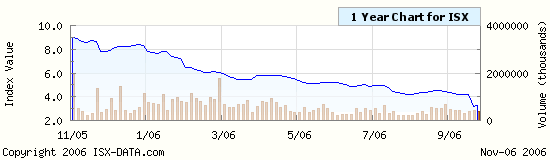
Monday, November 06, 2006
Investing in the Japanese Property Market - A new Housing Bull Market Emerges / Housing-Market / Analysis & Strategy
By: Nadeem_Walayat
The Japanese property 16 year bear market increasingly looks like it has come to an end. Presenting an excellent opportunity for investors to get in on a new housing bull market just when other property markets around the world are showing signs of peaking or like the US market are actually falling.
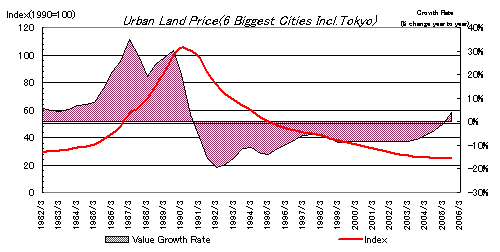
MarketOracle looks at how to invest in Japanese Property Market for the long-term.
Read full article... Read full article...
Thursday, November 02, 2006
How does the US Dollar Defy the Law of Gravity ? / Currencies / Analysis & Strategy
By: Gary_Dorsch
Monday, October 30, 2006
Global Warming and Profiting from Investing in Carbon Trading / Companies / Analysis & Strategy
By: Sarah_Jones
The Kyoto pact has spurred billions of euros in greenhouse trade between companies in Europe and through a program that allows rich countries to pick up credits for investing in clean projects in developing countries.The first phase of the pact requires about 35 developed countries to cut emissions of 5% from 1990 levels by 2008 to 2012.
But carbon dioxide-belching oil refineries and power plants, beyond some in Europe, mostly have yet to join in. That's mainly because President George W Bush withdrew US – the top polluter – from the international agreement, and as rapidly developing countries like China, India and Brazil oppose emissions limits because they have only recently industrialised.
But this is likely to change as the economic impact of global warming starts hitting and the carbon trading market could be transformed from a $10 billion a year market to a $1 trillion market. Read full article... Read full article...
Friday, October 20, 2006
US Housing Market heading for biggest decline since the Great Depression / Housing-Market / Analysis & Strategy
By: Sarah_Jones
According to the latest US Housing Market forecasts, US house prices are headed for a 3.7% decline in 2007. This would be the greatest full year decline since the 1930's Great Depression.
US House prices are expected to make a low late 2007, and probably move sideways for some time.
Read full article... Read full article...
Sunday, August 07, 2005
Peak Oil and can Saudi Arabia come to the rescue ? / Commodities / Analysis & Strategy
By: Nadeem_Walayat
As crude oil hits ever higher, Peak Oil concerns are not new, having first been raised by M. King Hubbert, a Shell Oil geophysicist, over 50 years ago. In a now-famous paper written in 1956, Hubbert suggested that production rates for oil (and other fossil fuels) follow a bell curve: In new fields, clean, highly pressurized oil flows abundantly to the surface, and as new wells are drilled, production rates rise steadily. After about half the oil has been extracted, however, production rates start to go down. There's still oil left, but declining pressure, exhaustion of the best oil pockets, and increasing contamination bring it to the surface ever more slowly. Applying this production model to the entire United States, taking into account the rate at which new fields were being discovered, Hubbert predicted that oil production in the lower 48 states would peak around 1970 and then start declining. And the facts is that oil production in the USA DID peak in 1970, and has since gradually declined from some 9.5 million barrels a day, to days level of 4.6 million barrels a day.
Read full article... Read full article...