


Imperial New World Order Strategy the Origins of World War III
Politics / New World Order Oct 15, 2009 - 08:51 AM GMT

 In the face of total global economic collapse, the prospects of a massive international war are increasing. Historically, periods of imperial decline and economic crisis are marked by increased international violence and war. The decline of the great European empires was marked by World War I and World War II, with the Great Depression taking place in the intermediary period.
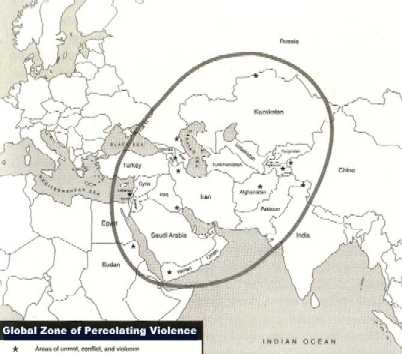 Currently, the world is witnessing the decline of the American empire, itself a product born out of World War II. As the post-war imperial hegemon, America ran the international monetary system and reigned as champion and arbitrator of the global political economy.
To manage the global political economy, the US has created the single largest and most powerful military force in world history. Constant control over the global economy requires constant military presence and action.
Now that both the American empire and global political economy are in decline and collapse, the prospect of a violent end to the American imperial age is drastically increasing.
This essay is broken into three separate parts. The first part covers US-NATO geopolitical strategy since the end of the Cold War, at the beginning of the New World Order, outlining the western imperial strategy that led to the war in Yugoslavia and the “War on Terror.” Part 2 analyzes the nature of “soft revolutions” or “colour revolutions” in US imperial strategy, focusing on establishing hegemony over Eastern Europe and Central Asia. Part 3 analyzes the nature of the imperial strategy to construct a New World Order, focusing on the increasing conflicts in Afghanistan, Pakistan, Iran, Latin America, Eastern Europe and Africa; and the potential these conflicts have for starting a new world war with China and Russia.
Defining a New Imperial Strategy
In 1991, with the collapse of the Soviet Union, US-NATO foreign policy had to re-imagine its role in the world. The Cold War served as a means of justifying US imperialist expansion across the globe with the aim of “containing” the Soviet threat. NATO itself was created and existed for the sole purpose of forging an anti-Soviet alliance. With the USSR gone, NATO had no reason to exist, and the US had to find a new purpose for its imperialist strategy in the world.
In 1992, the US Defense Department, under the leadership of Secretary of Defense Dick Cheney [later to be George Bush Jr.’s VP], had the Pentagon’s Under Secretary of Defense for Policy, Paul Wolfowitz [later to be George Bush Jr.’s Deputy Secretary of Defense and President of the World Bank], write up a defense document to guide American foreign policy in the post-Cold War era, commonly referred to as the “New World Order.”
The Defense Planning Guidance document was leaked in 1992, and revealed that, “In a broad new policy statement that is in its final drafting phase, the Defense Department asserts that America’s political and military mission in the post-cold-war era will be to ensure that no rival superpower is allowed to emerge in Western Europe, Asia or the territories of the former Soviet Union,” and that, “The classified document makes the case for a world dominated by one superpower whose position can be perpetuated by constructive behavior and sufficient military might to deter any nation or group of nations from challenging American primacy.”
Further, “the new draft sketches a world in which there is one dominant military power whose leaders ‘must maintain the mechanisms for deterring potential competitors from even aspiring to a larger regional or global role’.” Among the necessary challenges to American supremacy, the document “postulated regional wars against Iraq and North Korea,” and identified China and Russia as its major threats. It further “suggests that the United States could also consider extending to Eastern and Central European nations security commitments similar to those extended to Saudi Arabia, Kuwait and other Arab states along the Persian Gulf.”[1]
NATO and Yugoslavia
The wars in Yugoslavia throughout the 1990s served as a justification for the continued existence of NATO in the world, and to expand American imperial interests in Eastern Europe.
The World Bank and IMF set the stage for the destabilization of Yugoslavia. After long-time dictator of Yugoslavia, Josip Tito, died in 1980, a leadership crisis developed. In 1982, American foreign policy officials organized a set of IMF and World Bank loans, under the newly created Structural Adjustment Programs (SAPs), to handle the crisis of the $20 billion US debt. The effect of the loans, under the SAP, was that they “wreaked economic and political havoc... The economic crisis threatened political stability ... it also threatened to aggravate simmering ethnic tensions.”[2]
In 1989, Slobodan Milosevic became President of Serbia, the largest and most powerful of all the Yugoslav republics. Also in 1989, Yugoslavia’s Premier traveled to the US to meet President George H.W. Bush in order to negotiate another financial aid package. In 1990, the World Bank/IMF program began, and the Yugoslav state’s expenditures went towards debt repayment. As a result, social programs were dismantled, the currency devalued, wages frozen, and prices rose. The “reforms fueled secessionist tendencies that fed on economic factors as well as ethnic divisions, virtually ensuring the de facto secession of the republic,” leading to Croatia and Slovenia’s succession in 1991.[3]
In 1990, US the intelligence community released a National Intelligence Estimate (NIE), predicting that Yugoslavia would break apart, erupt in civil war, and the report then placed blame on Serbian President Milosevic for the coming destabilization.[4]
In 1991, conflict broke out between Yugoslavia and Croatia, when it, too, declared independence. A ceasefire was reached in 1992. Yet, the Croats continued small military offensives until 1995, as well as participating in the war in Bosnia. In 1995, Operation Storm was undertaken by Croatia to try to retake the Krajina region. A Croatian general was recently put on trial at The Hague for war crimes during this battle, which was key to driving the Serbs out of Croatia and “cemented Croatian independence.” The US supported the operation and the CIA actively provided intelligence to Croat forces, leading to the displacement of between 150,000 and 200,000 Serbs, largely through means of murder, plundering, burning villages and ethnic cleansing.[5] The Croatian Army was trained by US advisers, and the general on trial was even personally supported by the CIA.[6]
The Clinton administration gave the “green light” to Iran to arm the Bosnian Muslims and “from 1992 to January 1996, there was an influx of Iranian weapons and advisers into Bosnia.” Further, “Iran, and other Muslim states, helped to bring Mujihadeen fighters into Bosnia to fight with the Muslims against the Serbs, 'holy warriors' from Afghanistan, Chechnya, Yemen and Algeria, some of whom had suspected links with Osama bin Laden's training camps in Afghanistan.”
It was “Western intervention in the Balkans [that] exacerbated tensions and helped to sustain hostilities. By recognising the claims of separatist republics and groups in 1990/1991, Western elites - the American, British, French and German - undermined government structures in Yugoslavia, increased insecurities, inflamed conflict and heightened ethnic tensions. And by offering logistical support to various sides during the war, Western intervention sustained the conflict into the mid-1990s. Clinton's choice of the Bosnian Muslims as a cause to champion on the international stage, and his administration's demands that the UN arms embargo be lifted so that the Muslims and Croats could be armed against the Serbs, should be viewed in this light.”[7]
During the war in Bosnia, there “was a vast secret conduit of weapons smuggling though Croatia. This was arranged by the clandestine agencies of the US, Turkey and Iran, together with a range of radical Islamist groups, including Afghan mojahedin and the pro-Iranian Hizbullah.” Further, “the secret services of Ukraine, Greece and Israel were busy arming the Bosnian Serbs.”[8] Germany’s intelligence agency, the BND, also ran arms shipments to the Bosnian Muslims and Croatia to fight against the Serbs.[9]
The US had influenced the war in the region in a variety of ways. As the Observer reported in 1995, a major facet of their involvement was through “Military Professional Resources Inc (MPRI), a Virginia-based American private company of retired generals and intelligence officers. The American embassy in Zagreb admits that MPRI is training the Croats, on licence from the US government.” Further, The Dutch “were convinced that US special forces were involved in training the Bosnian army and the Bosnian Croat Army (HVO).”[10]
As far back as 1988, the leader of Croatia met with the German Chancellor Helmut Kohl to create “a joint policy to break up Yugoslavia,” and bring Slovenia and Croatia into the “German economic zone.” So, US Army officers were dispatched to Croatia, Bosnia, Albania, and Macedonia as “advisers” and brought in US Special Forces to help.[11] During the nine-month cease-fire in the war in Bosnia-Herzegovina, six US generals met with Bosnian army leaders to plan the Bosnian offensive that broke the cease-fire.[12]
In 1996, the Albanian Mafia, in collaboration with the Kosovo Liberation Army (KLA), a militant guerilla organization, took control over the enormous Balkan heroin trafficking routes. The KLA was linked to former Afghan Mujaheddin fighters in Afghanistan, including Osama bin Laden.[13]
In 1997, the KLA began fighting against Serbian forces,[14] and in 1998, the US State Department removed the KLA from its list of terrorist organizations.[15] Before and after 1998, the KLA was receiving arms, training and support from the US and NATO, and Clinton’s Secretary of State, Madeline Albright, had a close political relationship with KLA leader Hashim Thaci.[16]
Both the CIA and German intelligence, the BND, supported the KLA terrorists in Yugoslavia prior to and after the 1999 NATO bombing of Yugoslavia. The BND had KLA contacts since the early 1990s, the same period that the KLA was establishing its Al-Qaeda contacts.[17] KLA members were trained by Osama bin Laden at training camps in Afghanistan. Even the UN stated that much of the violence that occurred came from KLA members, “especially those allied with Hashim Thaci.”[18]
The March 1999 NATO bombing of Kosovo was justified on the pretense of putting an end to Serbian oppression of Kosovo Albanians, which was termed genocide. The Clinton Administration made claims that at least 100,000 Kosovo Albanians were missing and “may have been killed” by the Serbs. Bill Clinton personally compared events in Kosovo to the Holocaust. The US State Department had stated that up to 500,000 Albanians were feared dead. Eventually, the official estimate was reduced to 10,000, however, after exhaustive investigations, it was revealed that the death of less than 2,500 Albanians could be attributed to the Serbs. During the NATO bombing campaign, between 400 and 1,500 Serb civilians were killed, and NATO committed war crimes, including the bombing of a Serb TV station and a hospital.[19]
In 2000, the US State Department, in cooperation with the American Enterprise Institute, AEI, held a conference on Euro-Atlantic integration in Slovakia. Among the participants were many heads of state, foreign affairs officials and ambassadors of various European states as well as UN and NATO officials.[20] A letter of correspondence between a German politician present at the meeting and the German Chancellor, revealed the true nature of NATO’s campaign in Kosovo. The conference demanded a speedy declaration of independence for Kosovo, and that the war in Yugoslavia was waged in order to enlarge NATO, Serbia was to be excluded permanently from European development to justify a US military presence in the region, and expansion was ultimately designed to contain Russia.[21]
Of great significance was that, “the war created a raison d'être for the continued existence of NATO in a post-Cold War world, as it desperately tried to justify its continued existence and desire for expansion.” Further, “The Russians had assumed NATO would dissolve at the end of the Cold War. Instead, not only has NATO expanded, it went to war over an internal dispute in a Slavic Eastern European country.” This was viewed as a great threat. Thus, “much of the tense relations between the United States and Russia over the past decade can be traced to the 1999 war on Yugoslavia.”[22]
The War on Terror and the Project for the New American Century (PNAC)
When Bill Clinton became President, the neo-conservative hawks from the George H.W. Bush administration formed a think tank called the Project for the New American Century, or PNAC. In 2000, they published a report called, Rebuilding America’s Defenses: Strategy, Forces, and Resources for a New Century. Building upon the Defense Policy Guidance document, they state that, “the United States must retain sufficient forces able to rapidly deploy and win multiple simultaneous large-scale wars.”[23] Further, there is “need to retain sufficient combat forces to fight and win, multiple, nearly simultaneous major theatre wars,”[24] and that “the Pentagon needs to begin to calculate the force necessary to protect, independently, US interests in Europe, East Asia and the Gulf at all times.”[25]
Interestingly, the document stated that, “the United States has for decades sought to play a more permanent role in Gulf regional security. While the unresolved conflict with Iraq provides the immediate justification, the need for a substantial American force presence in the Gulf transcends the issue of the regime of Saddam Hussein.”[26] However, in advocating for massive increases in defense spending and expanding the American empire across the globe, including the forceful destruction of multiple countries through major theatre wars, the report stated that, “Further, the process of transformation, even if it brings revolutionary change, is likely to be a long one, absent some catastrophic and catalyzing event – like a new Pearl Harbor.”[27] That event came one year later with the events of 9/11. Many of the authors of the report and members of the Project for the New American Century had become officials in the Bush administration, and were conveniently in place to enact their “Project” after they got their “new Pearl Harbor.”
The plans for war were “already under development by far right Think Tanks in the 1990s, organisations in which cold-war warriors from the inner circle of the secret services, from evangelical churches, from weapons corporations and oil companies forged shocking plans for a new world order.” To do this, “the USA would need to use all means - diplomatic, economic and military, even wars of aggression - to have long term control of the resources of the planet and the ability to keep any possible rival weak.”
Among the people involved in PNAC and the plans for empire, “Dick Cheney - Vice President, Lewis Libby - Cheney's Chief of Staff, Donald Rumsfeld - Defence Minister, Paul Wolfowitz - Rumsfeld's deputy, Peter Rodman - in charge of 'Matters of Global Security', John Bolton - State Secretary for Arms Control, Richard Armitage - Deputy Foreign Minister, Richard Perle - former Deputy Defence Minister under Reagan, now head of the Defense Policy Board, William Kristol - head of the PNAC and adviser to Bush, known as the brains of the President, Zalmay Khalilzad,” who became Ambassador to both Afghanistan and Iraq following the regime changes in those countries.[28]
Brzezinski’s “Grand Chessboard”
Arch-hawk strategist, Zbigniew Brzezinski, co-founder of the Trilateral Commission with David Rockefeller, former National Security Adviser and key foreign policy architect in Jimmy Carter’s administration, also wrote a book on American geostrategy. Brzezinski is also a member of the Council on Foreign Relations and the Bilderberg Group, and has also been a board member of Amnesty International, the Atlantic Council and the National Endowment for Democracy. Currently, he is a trustee and counselor at the Center for Strategic and International Studies (CSIS), a major US policy think tank.
In his 1997 book, The Grand Chessboard, Brzezinski outlined a strategy for America in the world. He wrote, “For America, the chief geopolitical prize is Eurasia. For half a millennium, world affairs were dominated by Eurasian powers and peoples who fought with one another for regional domination and reached out for global power.” Further, “how America ‘manages’ Eurasia is critical. Eurasia is the globe’s largest continent and is geopolitically axial. A power that dominates Eurasia would control two of the world’s three most advanced and economically productive regions. A mere glance at the map also suggests that control over Eurasia would almost automatically entail African subordination.”[29]
He continued in outlining a strategy for American empire, stating that, “it is imperative that no Eurasian challenger emerges, capable of dominating Eurasia and thus of also challenging America. The formulation of a comprehensive and integrated Eurasian geostrategy is therefore the purpose of this book.”[30] He explained that, “Two basic steps are thus required: first, to identify the geostrategically dynamic Eurasian states that have the power to cause a potentially important shift in the international distribution of power and to decipher the central external goals of their respective political elites and the likely consequences of their seeking to attain them: [and] second, to formulate specific U.S. policies to offset, co-opt, and/or control the above.”[31]
What this means is that is it of primary importance to first identify states that could potentially be a pivot upon which the balance of power in the region exits the US sphere of influence; and secondly, to “offset, co-opt, and/or control” such states and circumstances. An example of this would be Iran; being one of the world’s largest oil producers, and in a strategically significant position in the axis of Europe, Asia and the Middle East. Iran could hold the potential to alter the balance of power in Eurasia if it were to closely ally itself with Russia or China, or both – giving those nations a heavy supply of oil as well as a sphere of influence in the Gulf, thus challenging American hegemony in the region.
Brzezinski removed all subtlety from his imperial leanings, and wrote, “To put it in a terminology that harkens back to the more brutal age of ancient empires, the three grand imperatives of imperial geostrategy are to prevent collusion and maintain security dependence among the vassals, to keep tributaries pliant and protected, and to keep the barbarians from coming together.”[32]
Brzezinski referred to the Central Asian republics as the “Eurasian Balkans,” writing that, “Moreover, they [the Central Asian Republics] are of importance from the standpoint of security and historical ambitions to at least three of their most immediate and more powerful neighbors, namely Russia, Turkey and Iran, with China also signaling an increasing political interest in the region. But the Eurasian Balkans are infinitely more important as a potential economic prize: an enormous concentration of natural gas and oil reserves is located in the region, in addition to important minerals, including gold.”[33] He further wrote that, “It follows that America's primary interest is to help ensure that no single power comes to control this geopolitical space and that the global community has unhindered financial and economic access to it.”[34] This is a clear example of America’s role as an engine of empire; with foreign imperial policy designed to maintain US strategic positions, but primarily and “infinitely more important,” is to secure an “economic prize” for “the global community.” In other words, the United States is an imperial hegemon working for international financial interests.
Brzezinski also warned that, “the United States may have to determine how to cope with regional coalitions that seek to push America out of Eurasia, thereby threatening America's status as a global power,”[35] and he, “puts a premium on maneuver and manipulation in order to prevent the emergence of a hostile coalition that could eventually seek to challenge America's primacy.” Thus, “The most immediate task is to make certain that no state or combination of states gains the capacity to expel the United States from Eurasia or even to diminish significantly its decisive arbitration role.”[36]
The War on Terror and Surplus Imperialism
In 2000, the Pentagon released a document called Joint Vision 2020, which outlined a project to achieve what they termed, “Full Spectrum Dominance,” as the blueprint for the Department of Defense in the future. “Full-spectrum dominance means the ability of U.S. forces, operating alone or with allies, to defeat any adversary and control any situation across the range of military operations.” The report “addresses full-spectrum dominance across the range of conflicts from nuclear war to major theater wars to smaller-scale contingencies. It also addresses amorphous situations like peacekeeping and noncombat humanitarian relief.” Further, “The development of a global information grid will provide the environment for decision superiority.”[37]
As political economist, Ellen Wood, explained, “Boundless domination of a global economy, and of the multiple states that administer it, requires military action without end, in purpose or time.”[38] Further, “Imperial dominance in a global capitalist economy requires a delicate and contradictory balance between suppressing competition and maintaining conditions in competing economies that generate markets and profit. This is one of the most fundamental contradictions of the new world order.”[39]
Following 9/11, the “Bush doctrine” was put in place, which called for “a unilateral and exclusive right to preemptive attack, any time, anywhere, unfettered by any international agreements, to ensure that ‘[o]ur forces will be strong enough to dissuade potential adversaries from pursuing a military build-up in hope of surpassing, or equaling, the power of the United States’.”[40]
NATO undertook its first ground invasion of any nation in its entire history, with the October 2001 invasion and occupation of Afghanistan. The Afghan war was in fact, planned prior to the events of 9/11, with the breakdown of major pipeline deals between major western oil companies and the Taliban. The war itself was planned over the summer of 2001 with the operational plan to go to war by mid-October.[41]
Afghanistan is extremely significant in geopolitical terms, as, “Transporting all the Caspian basin's fossil fuel through Russia or Azerbaijan would greatly enhance Russia's political and economic control over the central Asian republics, which is precisely what the west has spent 10 years trying to prevent. Piping it through Iran would enrich a regime which the US has been seeking to isolate. Sending it the long way round through China, quite aside from the strategic considerations, would be prohibitively expensive. But pipelines through Afghanistan would allow the US both to pursue its aim of ‘diversifying energy supply’ and to penetrate the world's most lucrative markets.”[42]
As the San Francisco Chronicle pointed out a mere two weeks following the 9/11 attacks, “Beyond American determination to hit back against the perpetrators of the Sept. 11 attacks, beyond the likelihood of longer, drawn-out battles producing more civilian casualties in the months and years ahead, the hidden stakes in the war against terrorism can be summed up in a single word: oil.” Explaining further, “The map of terrorist sanctuaries and targets in the Middle East and Central Asia is also, to an extraordinary degree, a map of the world's principal energy sources in the 21st century. The defense of these energy resources -- rather than a simple confrontation between Islam and the West -- will be the primary flash point of global conflict for decades to come.”
Among the many notable states where there is a crossover between terrorism and oil and gas reserves of vital importance to the United States and the West, are Saudi Arabia, Libya, Bahrain, the Gulf Emirates, Iran, Iraq, Egypt, Sudan and Algeria, Turkmenistan, Kazakhstan, Azerbaijan, Chechnya, Georgia and eastern Turkey. Importantly, “this region accounts for more than 65 percent of the world's oil and natural gas production.” Further, “It is inevitable that the war against terrorism will be seen by many as a war on behalf of America's Chevron, ExxonMobil and Arco; France's TotalFinaElf; British Petroleum; Royal Dutch Shell and other multinational giants, which have hundreds of billions of dollars of investment in the region.”[43]
It’s no secret that the Iraq war had much to do with oil. In the summer of 2001, Dick Cheney convened an Energy Task Force, which was a highly secret set of meetings in which energy policy was determined for the United States. In the meetings and in various other means of communication, Cheney and his aides met with top officials and executives of Shell Oil, British Petroleum (BP), Exxon Mobil, Chevron, Conoco, and Chevron.[44] At the meeting, which took place before 9/11 and before there was any mention of a war on Iraq, documents of Iraqi oilfields, pipelines, refineries and terminals were presented and discussed, and “Saudi Arabian and United Arab Emirates (UAE) documents likewise feature a map of each country’s oilfields, pipelines, refineries and tanker terminals.”[45] Both Royal Dutch Shell and British Petroleum have since received major oil contracts to develop Iraqi oilfields.[46]
The war on Iraq, as well as the war on Afghanistan, also largely serve specifically American, and more broadly, Western imperial-strategic interests in the region. In particular, the wars were strategically designed to eliminate, threaten or contain regional powers, as well as to directly install several dozen military bases in the region, firmly establishing an imperial presence. The purpose of this is largely aimed at other major regional players and specifically, encircling Russia and China and threatening their access to the regions oil and gas reserves. Iran is now surrounded, with Iraq on one side, and Afghanistan on the other.
Concluding Remarks
Part 1 of this essay outlined the US-NATO imperial strategy for entering the New World Order, following the break-up of the Soviet Union in 1991. The primary aim was focused on encircling Russia and China and preventing the rise of a new superpower. The US was to act as the imperial hegemon, serving international financial interests in imposing the New World Order. The next part to this essay examines the “colour revolutions” throughout Eastern Europe and Central Asia, continuing the US and NATO policy of containing Russia and China; while controlling access to major natural gas reserves and transportation routes. The “colour revolutions” have been a pivotal force in geopolitical imperial strategy, and analyzing them is key to understanding the New World Order.
Endnotes
[1] Tyler, Patrick E. U.S. Strategy Plan Calls for Insuring No Rivals Develop: A One Superpower World. The New York Times: March 8, 1992. http://work.colum.edu/~amiller/wolfowitz1992.htm
[2] Louis Sell, Slobodan Milosevic and the Destruction of Yugoslavia. Duke University Press, 2002: Page 28
Michel Chossudovsky, Dismantling Former Yugoslavia, Recolonizing Bosnia-Herzegovina. Global Research: February 19, 2002: http://globalresearch.ca/index.php?context=va&aid=370
[3] Michel Chossudovsky, Dismantling Former Yugoslavia, Recolonizing Bosnia-Herzegovina. Global Research: February 19, 2002: http://globalresearch.ca/index.php?context=va&aid=370
[4] David Binder, Yugoslavia Seen Breaking Up Soon. The New York Times: November 28, 1990
[5] Ian Traynor, Croat general on trial for war crimes. The Guardian: March 12, 2008: http://www.guardian.co.uk/world/2008/mar/12/warcrimes.balkans
[6] Adam LeBor, Croat general Ante Gotovina stands trial for war crimes. The Times Online: March 11, 2008: http://www.timesonline.co.uk/tol/news/world/europe/article3522828.ece
[7] Brendan O’Neill, 'You are only allowed to see Bosnia in black and white'. Spiked: January 23, 2004: http://www.spiked-online.com/Articles/0000000CA374.htm
[8] Richard J. Aldrich, America used Islamists to arm the Bosnian Muslims. The Guardian: April 22, 2002: http://www.guardian.co.uk/world/2002/apr/22/warcrimes.comment/print
[9] Tim Judah, German spies accused of arming Bosnian Muslims. The Telegraph: April 20, 1997: http://www.serbianlinks.freehosting.net/german.htm
[10] Charlotte Eagar, Invisible US Army defeats Serbs. The Observer: November 5, 1995: http://charlotte-eagar.com/stories/balkans110595.shtml
[11] Gary Wilson, New reports show secret U.S. role in Balkan war. Workers World News Service: 1996: http://www.workers.org/ww/1997/bosnia.html
[12] IAC, The CIA Role in Bosnia. International Action Center: http://www.iacenter.org/bosnia/ciarole.htm
[13] History Commons, Serbia and Montenegro: 1996-1999: Albanian Mafia and KLA Take Control of Balkan Heroin Trafficking Route. The Center for Cooperative Research: http://www.historycommons.org/topic.jsp?topic=country_serbia_and_montenegro
[14] History Commons, Serbia and Montenegro: 1997: KLA Surfaces to Resist Serbian Persecution of Albanians. The Center for Cooperative Research: http://www.historycommons.org/topic.jsp?topic=country_serbia_and_montenegro
[15] History Commons, Serbia and Montenegro: February 1998: State Department Removes KLA from Terrorism List. The Center for Cooperative Research: http://www.historycommons.org/topic.jsp?topic=country_serbia_and_montenegro
[16] Marcia Christoff Kurop, Al Qaeda's Balkan Links. The Wall Street Journal: November 1, 2001: http://www.freerepublic.com/focus/fr/561291/posts
[17] Global Research, German Intelligence and the CIA supported Al Qaeda sponsored Terrorists in Yugoslavia. Global Research: February 20, 2005: http://globalresearch.ca/index.php?context=va&aid=431
[18] Michel Chossudovsky, Kosovo: The US and the EU support a Political Process linked to Organized Crime. Global Research: February 12, 2008: http://globalresearch.ca/index.php?context=va&aid=8055
[19] Andrew Gavin Marshall, Breaking Yugoslavia. Geopolitical Monitor: July 21, 2008: http://www.geopoliticalmonitor.com/content/backgrounders/2008-07-21/breaking-yugoslavia/
[20] AEI, Is Euro-Atlantic Integration Still on Track? Participant List. American Enterprise Institute: April 28-30, 2000: http://www.aei.org/research/nai/events/pageID.440,projectID.11/default.asp
[21] Aleksandar Pavi, Correspondence between German Politicians Reveals the Hidden Agenda behind Kosovo's "Independence". Global Research: March 12, 2008: http://www.globalresearch.ca/index.php?context=va&aid=8304
[22] Stephen Zunes, The War on Yugoslavia, 10 Years Later. Foreign Policy in Focus: April 6, 2009: http://www.fpif.org/fpiftxt/6017
[23] PNAC, Rebuilding America’s Defenses. Project for the New American Century: September 2000, page 6: http://www.newamericancentury.org/publicationsreports.htm
[24] Ibid. Page 8
[25] Ibid. Page 9
[26] Ibid. Page 14
[27] Ibid. Page 51
[28] Margo Kingston, A think tank war: Why old Europe says no. The Sydney Morning Herald: March 7, 2003: http://www.smh.com.au/articles/2003/03/07/1046826528748.html
[29] Brzezinski, Zbigniew. The Grand Chessboard: American Primacy and its Geostrategic Imperatives. Basic Books, 1997: Pages 30-31
[30] Brzezinski, Zbigniew. The Grand Chessboard: American Primacy and its Geostrategic Imperatives. Basic Books, 1997: Page xiv
[31] Brzezinski, Zbigniew. The Grand Chessboard: American Primacy and its Geostrategic Imperatives. Basic Books, 1997: Page 41
[32] Brzezinski, Zbigniew. The Grand Chessboard: American Primacy and its Geostrategic Imperatives. Basic Books, 1997: Page 40
[33] Brzezinski, Zbigniew. The Grand Chessboard: American Primacy and its Geostrategic Imperatives. Basic Books, 1997: Page 124
[34] Brzezinski, Zbigniew. The Grand Chessboard: American Primacy and its Geostrategic Imperatives. Basic Books, 1997: Page 148
[35] Brzezinski, Zbigniew. The Grand Chessboard: American Primacy and its Geostrategic Imperatives. Basic Books, 1997: Page 55
[36] Brzezinski, Zbigniew. The Grand Chessboard: American Primacy and its Geostrategic Imperatives. Basic Books, 1997: Page 198
[37] Jim Garamone, Joint Vision 2020 Emphasizes Full-spectrum Dominance. American Forces Press Service: June 2, 2000:
http://www.defenselink.mil/news/newsarticle.aspx?id=45289
[38] Ellen Wood, Empire of Capital. Verso, 2003: page 144
[39] Ellen Wood, Empire of Capital. Verso, 2003: page 157
[40] Ellen Wood, Empire of Capital. Verso, 2003: page 160
[41] Andrew G. Marshall, Origins of Afghan War. Geopolitical Monitor: September 14, 2008:
http://www.geopoliticalmonitor.com/content/backgrounders/2008-09-14/origins-of-the-afghan-war/
[42] George Monbiot, America's pipe dream. The Guardian: October 23, 2001:
http://www.guardian.co.uk/world/2001/oct/23/afghanistan.terrorism11
[43] Frank Viviano, Energy future rides on U.S. war. San Francisco Chronicle: September 26, 2001:
http://www.sfgate.com/cgi-bin/article.cgi?file=/chronicle/archive/2001/09/26/MN70983.DTL
[44] Dana Milbank and Justin Blum, Document Says Oil Chiefs Met With Cheney Task Force. Washington Post: November 16, 2005:
http://www.washingtonpost.com/wp-dyn/content/article/2005/11/15/AR2005111501842_pf.html
[45] Judicial Watch, CHENEY ENERGY TASK FORCE DOCUMENTS FEATURE MAP OF IRAQI OILFIELDS. Commerce Department: July 17, 2003: http://www.judicialwatch.org/printer_iraqi-oilfield-pr.shtml
[46] TERRY MACALISTER, Criticism as Shell signs $4bn Iraq oil deal. Mail and Guardian: September 30, 2008: http://www.mg.co.za/article/2008-09-30-criticism-as-shell-signs-4bn-iraq-oil-deal
Al-Jazeera, BP group wins Iraq oil contract. Al Jazeera Online: June 30, 2009: http://english.aljazeera.net/news/middleeast/2009/06/200963093615637434.
Andrew G. Marshall is a Research Associate of the Centre for Research on Globalization (CRG). He is currently studying Political Economy and History at Simon Fraser University.
Andrew G. Marshall is a frequent contributor to Global Research. Global Research Articles by Andrew G. Marshall© Copyright Andrew G. Marshall , Global Research, 2009
Disclaimer: The views expressed in this article are the sole responsibility of the author and do not necessarily reflect those of the Centre for Research on Globalization. The contents of this article are of sole responsibility of the author(s). The Centre for Research on Globalization will not be responsible or liable for any inaccurate or incorrect statements contained in this article.
© 2005-2022 http://www.MarketOracle.co.uk - The Market Oracle is a FREE Daily Financial Markets Analysis & Forecasting online publication.
